A robotic arm, quietly and relentlessly at work, may come into view as you walk around the new RCA Battersea campus in London. Its presence is the result of the freshly completed Royal College of Art Battersea Campus Building, which, designed by Herzog & de Meuron, has opened its doors for the university’s creative community. This visibility also emphasises the RCA’s expansion, focus and transformation into a STEAM (science, technology, engineering, art and mathematics) postgraduate university, where subjects such as computer and materials science, robotics, advanced manufacturing and intelligent mobility are placed at the heart of the school.
Within this context, Herzog & de Meuron’s relatively low, linear building feels like an ode to brick, featuring the Swiss duo and team’s long-standing explorations in material, surface and texture. Clad mostly in brown blocks and glass and featuring hardwearing concrete floors, the new structure includes four storeys of studios and workshops (for art and design); The Hangar – a double-height, 350 sq m multifunctional activity space; a dedicated robotics space; a research and development section; a purpose-built home for the Helen Hamlyn Centre for Design; and a seminar and conference facility. The overall character seems industrial, utilitarian; this is a building conceived as a workshop.
Working with the neighbourhood’s volumes, materials and heritage, the architects moulded a complex that is divided into two sections – a longer, lower, north one, defined by vertical, brick-clad lines and a sawtooth roofline, and a narrower south one that is not only taller, but also feels more ‘vertical’ too, as it’s wrapped in a layer of off-white fins. The two volumes are connected internally and externally through patios and a café that spills outside and invites the users to take over every corner (there is a public pathway to the café too, so anyone can join in). There’s an openness and porosity throughout that was a strong part of the design intention, as the surroundings and passers-by are invited in, and departmental cross-pollination is encouraged.
Plenty of sunlight, natural ventilation and solar panels form part of the building’s environmental strategies. ‘The RCA campus in Battersea is conceived as a porous and flexible “territory” of platforms upon which the varied needs of the RCA curriculum are given space to change and grow, enabling the transformation of space as needed during this process. The studio and research buildings are designed as communities unto themselves – place[s] that encourage interactions between students, faculty and staff. Our intention is also to create a civic connector, encouraging circulation through the site and inviting exchange between members of the RCA community, the neighbourhood and [the] wider city,’ the architects explain.
The building opens with an exhibition curated by artist and photographer Rut Blees Luxemburg in its Hangar event space. ‘Future Archive’ features an exploration of the building’s construction process – from documentary photography of the volumes going up (some artfully created by Blees Luxemburg herself, as photographs printed on concrete slabs) to the participation of the building-site workers and more.
The show, which aims to ‘bring to the fore the often hidden narratives of architecture and construction’, will move to the RIBA on 1 June 2022, to mark the start of the London Festival of Architecture, and will remain there until 9 July. §
http://dlvr.it/SR2SQL
miercuri, 25 mai 2022
Tomás Saraceno’s Cloud Cities Barcelona: utopian ecology, education, and epic city views
‘I hate it that people are so clean, we are exterminating the spiders! Where are the spiders?’ It was an unexpected answer to a question asked to Tomás Saraceno about whether his latest artwork is child-friendly. But Saraceno does not think – or make – the expected. This installation, Cloud Cities Barcelona, is no exception – seemingly soaring into the Catalan sky from a height of 125m, it fills the 360-degree viewing platform inside the summit of the Mirador Torre Glòries, designed by Jean Nouvel and Fermín Vázquez.
Saraceno’s practice also leads to unexpected responses; weaving between architecture, ecology, sculpture, and invention, there are recurring themes, including the aforementioned spiders. For his takeover of the cavernous Palais de Tokyo, the Argentine-born, Berlin-based artist (and 2018 Wallpaper* guest editor) ‘collaborated’ with 500 live spiders filling the space with their webs. And in Florence’s Palazzo Strozzi, he constructed a weblike structure, trapping large geometric pods, which now reads as a scale model for this enormous intervention.
Exterior view of Mirador Torre Glòries. Photography: Mirador Torre Glòries
His other overarching interest is clouds, and the delicate, disappearing ecologies they represent. Since 2002, his Cloud Cities series has explored porous modes of utopian, networked inhabitation as large-scale, interactive sculptures. Inspired by the post-war radicals like Buckminster Fuller, Yona Friedman, and Archigram (‘Peter Cook was my professor for one semester,’ Saraceno recalls), he seeks within these reflexive environments to consider ways of finding new relationships to each other, nature, and architecture.
Cloud Cities Barcelona is the most complex work in the series yet. A carefully composed cradle of slender cables wrapping the light-filled loft – three office floors transformed into one space to facilitate the structure – is not solely a sculpture to gaze at alongside panoramas of Barcelona, but a unique, interactive experience – for those who dare.
Tomás Saraceno. Installation views of Cloud Cities Barcelona, 2022. Courtesy Studio Tomás Saraceno and Mirador Torre Glòries. Photography Studio Tomás Saraceno © Tomás Saraceno
After squeezing through a small opening, a tunnel formed of geometric panels is ahead, though the destination remains unknown. It is an unreliable passage, slippery underfoot, occasionally moving as an unknown stranger elsewhere struggles within, and at times claustrophobic – in a space barely larger than an adult body, the only way to progress is sometimes to clamber up or down.
It is tiring and disorientating. Soon a feeling of simply being within, with vertigo in each direction, takes over.
Some of the 113 pods offer cushions as an invitation to pause from the struggle, to relocate oneself within structure and city, maybe flicking through one of the numerous books on form, politics, and nature that Saraceno has laid around what he considers a ‘reading space’. ‘When at university in Argentina, I was living in a very small apartment and it was impossible to study – me, my brother and sister in one room. The only way to study was to go to a public library, which opened all day and night. For me, I have great respect [for] public libraries in cities.’
For Saraceno, this is not just a touristic spectacle of adventure and city views, but a provocation towards a new type of space for thinking and learning. It’s a permanent installation, which eventually he wishes residents to ‘use as a public square’, and proposes that one day, instead of the current entrance fee, someone could turn up and ‘show a book, or say, “I want to read one inside”‘ for free entry; he talks of a space that ‘you can have access [to] because you need it – you need a space in the city’. With nature’s clouds disappearing due to climate change, Saraceno speaks of how such networked webs could also be constructed outside, wrapping around existing glass buildings to provide internal shade, as well as a new kind of explorable civic space.
Saraceno’s studio contains numerous workers, rooted in collaboration and ingenuity in ways he hopes can benefit the non-artistic world beyond. One of his architects, Tomas Charil, explains that each of the 256 cable-connecting joints in Cloud Cities Barcelona is unique, outputted from the 3D design through a software script. The engineering required to create such tiny detailed elements, as well as how the meshwork interjects into and connects with the building’s existing structure, is impressive and, for something which reads as so ephemeral and light, is incredibly robust and resilient.
In commissioning Saraceno, the building’s new owners may have been expecting a more conventional touristic viewing experience. Instead, only the most intrepid and agile explorers will find their path through. Saraceno tires of art that is experienced at speed, ‘maybe for a selfie, see it, check it, next. It’s painful.’ Cloud Cities Barcelona is not that, requiring physical labour, and then a desire to pause, perhaps to read a new book, or have an unexpected conversation with a nearby stranger within the web-cloud. Or maybe it’s just a space to stop and look from within a man-made cloud down, through nature-made clouds, and towards the city grid below – a space removed, other, and freeing. §
http://dlvr.it/SR2SNk
marți, 24 mai 2022
All(zone)’s 2022 MPavilion to address sustainability, interaction and the pandemic
How people should live in increasingly crowded built environments is a subject that obsesses Rachaporn Choochuey, and also one on which the Thai architect has staked so much of the work and reputation of her Bangkok-based studio, All(zone). The issues are maddening in their complexity and whilst no one seriously believes that they will be solved any time soon, the work that Choochuey has been producing – the 2016 MAIIAM Contemporary Art Museum in Chiang Mai and a deft study of sustainability and adaptive use for the 2019 Sharjah Architecture Triennial, for instance – is encouraging.
All the more reason to applaud the decision by the Melbourne-based Naomi Milgrom Foundation to award to All(zone) the design of this year’s MPavilion. Planned annually, like the UK’s Serpentine Pavilion, the remit of the Antipodean version is to engage the local community through talks, cultural events, workshops and performances under the literal aegis of a temporary installation. How All(zone) will interpret that engagement is an intriguing question that won’t be fully answered till the pavilion is unveiled to the public on 17 November 2022 in Melbourne’s bucolic Queen Victoria Gardens.
All(zone)’s Rachaporn Choochuey on MPavilion 2022 design
For now, it’s clear that All(zone)’s interpretation of the brief holds fast to the studio’s MO of a playful riff on porosity, light, and sustainable materials. To her credit, Choochuey does not skirt Covid-19, but she does change the rules of engagement. After two years of repeated lockdowns and confinement, she says she wants to celebrate outdoor living. And so, her iteration of MPavilion will be ‘a place where people can be together, seeing each other, eyes-to-eye in public. It has to be an open platform where activities, interventions, and collaborations can occur. This will be a casual space where everyone can feel at ease.’
Much of the groundwork has already been laid, Choochuey and her team sidestepping the initial restrictions of Covid lockdowns in Australia and Thailand through video calls. In the beginning, working remotely wasn’t easy, she admits, especially when it came to finessing details and materials, but the work is progressing at a reassuring clip.
Always intrigued by lightness in architecture, Choochuey trained at Columbia University and completed her PhD in Tokyo under the tutelage of Toyo Ito, and she credits a lot of the nuances in her work to him. ‘His work is, perhaps, the most influential. I wanted to understand more about the blurry quality of its presence, which is why I went to Tokyo. Being from a different culture, I soon realised that although it’s very powerful and beautiful, space in Japanese architecture is very tense and proper,’ she says. ‘In my studio, I always try to challenge the idea of architecture as a rigid form by pushing the boundary to the point where we can build the lightest building whilst exploring different ways to respond to climatic conditions with minimum energy consumption.’
As they say, watch this space. §
http://dlvr.it/SQyqW8
Discover Clerkenwell Design Week 2022
Since its conception in 2009, Clerkenwell Design Week has risen to become one of the UK’s leading independent design festivals. This year’s events (running from 24-26 May 2022) will see architects, designers and brands showcasing their best work and collaborating in design-led fringe events, pop-ups, workshops, talks and showroom presentations. The London neighourhood comes alive for the three-day event, including showroom openings and furniture exhibitions at key historical venues, including the subterranean House of Detention (showcasing emerging designers and lighting) and the Crypt of St James’ Church (hosting The British Collection). With an eclectic mix of interiors, surfaces, accessories and product design shows, it can be disorienting trying to map it all out alone. Here, we’ve collated a roundup of select shows to get you started.
Clerkenwell Design Week 2022: the highlights
‘Ceramics: Neverending Artworks’ at Iris Ceramica Group
Ceramics by Aldo Cibic
Italian street artist Camilla Falsini’s two day live performance of ceramics painting will describe environments, sustainability and energy transition. The multi faceted design work will be hosted at the ‘Ceramics: Neverending Artworks’ exhibition and will be held at the Iris Ceramica Group Flagship Store until 3 June 2022. Curated by non-profit organisation Yourban 2030, the show looks at art’s ability to incite collective growth and improve environmental awareness. Falsini’s show is inspired by the Memphis movement with its graphic, asymmetrical patterns in bright colours and actively involves the spectator in a communal performance while paying homage to some of the authors of the movement, some of whom will have work on display at the show.
Iris Ceramica Group Flagship Store, 61-67 Old Street
Benchmark launches workspace collection
Photography: Petr Krejci
Benchmark’s solid-wood additions to the ‘Victoria’ collection are mindful of a universal evolving approach to consumption and the growing need for sustainable furniture manufacture. The range carves, sands and slots American red oak and British-grown ash into a modular workbench, folding meeting table, sit-stand desk, and planter. Both timbers are selected for their contribution to a more sustainable process and pleasing organic tones. The ‘Migo’ stool will also be presented at the Benchmark show, the versatile stool originally designed by Pascal Hein for Wallpaper and AHEC’s Discovered initiative, and recently established in The Design Museum’s permanent collection. Imagined as a dynamic challenge to our perception of chairs and stools, it can be used in various ways and is made efficiently from a single piece of red oak, making it a ‘model of sustainable design both in material choice and in its rationalised design’ explains co-founder of Benchmark, Sean Sutcliffe.
British collection at St James Crypt, Clerkenwell Close, London EC1R 0EA
Colour Rush by Lothar Götz at VitrA
Photography: Foxall Studio
German artist Lothar Götz’s immersive, site-specific installation ‘Colour Rush’ will be housed at bathroom brand VitrA’s London showroom. The artwork utilises light, colour and geometry to present the space and will pair with discussions from industry professionals to give insights on the psychology of colour in design and art. The lineup includes Götz, Rhonda Drakeford and design director Erdem Akan. Alongside the discussions, a drop-in virtual reality experience will enable viewers to explore immersive bathroom spaces.
VitrA London Showroom, Turnmill building, 64 Turnmill Street, London EC1M 5RR
Alfredo Häberli at Moroso
Photography: Alessandro Paderni
Moroso’s latest products will show alongside the ‘Taba’ collection, realised by Swiss-Argentinian designer Alfredo Häberli in collaboration with the Italian company. In formulating the collection, Häberli ‘played with the precision of line, and poetics of organic language’ to create a series of asymmetric ottomans, armchairs, a bench and sofa. The graphic structures of the sofa are based on items from an Argentinian childhood game, the shapes were then developed to bring comfort and useability to the forefront of the design. Moroso’s most recent products at the show will be the ‘get lucky’ and ‘ruff’ chairs, which encompass ‘poetry and art’, along with the modulable ‘Frame-shift’ bookcase, and ‘Cloudscape’ sofa series. The products from the ‘Taba’ collection and Moroso range intersect in a moment of versatile comfort and simplicity in their adjustability and reduced features.
7-15 Rosebery Avenue - London - EC1R 4SP
Revo collection by Pearson Lloyd for Profim
Adding to the extensive list of brands who are innovating in an era of sustainability, Polish office furniture company Profim is demonstrating a circular economy with the launch of ‘Revo’. Rounded contours and soft colours characterise this distinctive range of sofas, benches, screens and stools. The extensive modular configurations facilitate wildly differentiated working environments. In striving to create a circular economy, Profim looked to recycled expanded propylene, reducing the weight and consequently carbon footprint of ‘Revo’s production and transport. The components to the furniture pieces are easily deconstructed, allowing them to be placed back into a conscious manufacturing cycle. The versatile textiles mimic natural fibres which come from two sources - one from consumer recycled plastic, and the other from salvaged marine plastics. The collection by Pearson Lloyd is an important step towards robust sustainability, with thoughtful visual design remaining prominent.
Flokk Showroom, 63 Central Street, London EC1V 3AF
Meditation at Ultrafabrics
Ultrafabrics are highlighting colour’s capacity to induce serenity along with stylist Despina Curtis through a reinstatement of white hues in the home. Their Hush range of fabrics will cover 13 new whites and off-whites with enhanced stain resistance, antimicrobial protection, or UV endurance options. Bringing sensory experiences to the forefront of their showcase, Ultrafabrics will be curating a series of multisensory and holistic events, influencing viewers to take a moment of quiet and experience the tranquil environment. Throughout the week, a guided meditation, herbal tea blending and talks by industry professionals will explore the importance of engaging our senses through art and design.
6 Northburgh Street, EC1V 0AY
§
http://dlvr.it/SQypys
Step into the greatest fashion boutiques around the world
From Loewe’s art-filled fashion store in Barcelona, Spain, to Balenciaga’s ‘raw’ architecture in London, we invite you to settle back and zoom into the standout details in these global boutiques. Retail design has never offered more respite.
Inside the best global fashion boutiques
Alaïa, Paris, France
Renovated according to designs by Marc Newson, Alaïa’s reopened 5 Rue de Moussy store – just next door to the house’s atelier in Paris’ Marais district – provides a ‘restored and revived’ space to showcase Pieter Mulier’s collections (the Belgium designer began his tenure in 2021, the first creative director since Azzedine Alaïa’s death in 2017). Described as ‘a space dedicated to beauty’, art, fashion and high design intermingle in the store’s rooms; a portrait of the late designer greets visitors upon entry, while works by Ron Arad, Julian Schnabel and Newson are found throughout an otherwise minimal design. ‘The space that shaped the history of Azzedine Alaïa is once again a place for exchanges, encounters and discoveries,’ say the house of the store, which marks a new chapter in Mulier’s vision for Alaïa – one still infused with the inimitable creative spirit of the house’s namesake.
maison-alaia.com
Loewe, Barcelona, Spain
Promising ‘luxury, intimacy, and culture’, the redesigned Casa Loewe on Barcelona’s Paseo de Gracia distils creative director Jonathan Anderson’s vision for the Spanish house, which centres on a deep-rooted commitment to craft, art and design. As such, the space – first designed by Catalan Modernist Lluís Domènech i Montaner – sees Loewe’s collections interspersed with commissioned installations by artists such as Tanabe Chikuunsai IV, whose bamboo sculpture will provide a centrepiece to the store, and Catalan artist Aurèlia Muñoz, who has created a large-scale hanging sculpture in macramé (other contemporary artists in the space include Haegue Yang, Richard Tuttle, Zizipho Poswa and Takayuki Sakiyama). Elsewhere, a breathtaking array of historical works will also feature, adding to Loewe’s ever-expanding collection – notably, a series of eight ceramics by Pablo Picasso. The luxurious fittings also ally with this idea of craft and hand-feel, from maple-wood counters, warm concrete floors, and vivid pillars and tiles – in shades designed to be reminiscent of the Mediterranean Sea – created by 1880-founded Catalan ceramic factory Ceràmica Cumella.
loewe.com
Theory, London, United Kingdom
Theory’s new London flagship marks a milestone for the American label – rather than a typical standalone space, it is instead situated inside a vast new Uniqlo store found on the city’s Regent Street (together, the two stores number 1,900 sq m). London-based architecture studio Sybarite created Theory’s ground-floor space, a sleek, minimal design in camel, beige and caramel which the brand says captures its essence, one of ‘modernity, balance, and openness’. Shoppers are encouraged to purchase simple layers – ‘constantly uncovered as the customer navigates around and through the environment’ – from a sharp edit of foundational pieces from the brand’s men’s and women’s collections. Alongside the comprehensive offering from Uniqlo, the two stores combine to create a unique and contemporary take on the traditional department store.
theory.com
Gentle Monster, Shanghai, China
A robot surveys shoppers as they enter Gentle Monster’s latest boutique in Shanghai – an expansive multidisciplinary five-storey space in the city’s Huangpu District – which celebrates the optical brand’s innovative and technologically-led approach to retail design. Gentle Haus also welcomes a host of other labels into its location: surrealist dessert brand Nuddake on its ground floor and the first Chinese flagship boutique of South Korean beauty brand Tamburins on its fourth. It took a year to develop the robotic face that sits on the 3rd floor of Gentle Haus, created by the brand’s Robotics lab, as part of an exhibition space that will host roving shows and pop-up events.
gentlemonster.com
Balenciaga, London, United Kingdom
Stroll past Balenciaga’s 772 sq m boutique on Sloane Street in London and you’d be forgiven for thinking the space was in a state of non-completion. In fact, the untreated textures, cracked and stained poured concrete flooring and blackened stairwells are synonymous with the French maison’s latest ’Raw’ architectural retail concept, one which revels in industrial flourishes and exposed fittings and the drama of the dilapidated. Here, electrical wires, air ducts and support beams are exposed and an unfinished elevator core even takes centre stage in the store. We suggest you walk past the boutique again.
balenciaga.com
Bally, London, United Kingdom
A magnificent, column-lined facade on the corner of Regent Street in Central London beckons design-led shoppers into Bally’s new 400 sq m flagship boutique. An evolution of the Swiss brand’s experiential multi-functional retail environments, first launched in Milan’s Montenapoleone boutique in 2019, the space is centralised on visual contrasts, juxtaposing marble with terracotta, and alludes to the UK’s capital city’s topographical and architectural history. Conceived in collaboration with Seen Displays, a London-based creative design and production agency, the store also boasts pieces designed by materiality-focused designer and maker James Shaw, on a series of strata-focused naturalistic plinths and fixtures, crafted using rammed earth, in a nod to the foundational clay of London’s architecture.
bally.co.uk
Rinascente, Rome, Italy
Photography by Alberto Strada
Designers Frederik De Wachter and Alberto Artesani of Milanese practice DWA have created a new interior for the fourth floor of Rinascente in Rome’s Piazza Fiume. This is the first step of an ambitious redesign of the iconic building originally conceived in 1961 by Franco Albini and Franca Helg, carried out by architect Ippolito Pestellini Laparelli’s Studio 2050 and due to be completed in 2023, while the 4th floor womenswear department by DWA is the first to open, in summer 2021. The colour palette is based on imposing shades of brick red on the ceiling and mint green on the display elements made of tubular sheets. ‘We tried to find a balance between the identity of our design codes and the importance of using the space of the original project,’ say the designers. ‘It is a design made of contrasts, distributed on almost imperceptible levels.’ Writer: Rosa Bertoli
rinascente.it
John Lobb, Beverly Hills, USA
The founder of heritage British bootmaker John Lobb famously walked from Cornwall to London in 1851 to fulfil his footwear dreams, and now the label has taken its own recent saunter around the globe. The brand is opening a series of boutiques, from Paris to Beverly Hills, designed by French architecture studio ciguë, which has also worked on retail spaces for Vejas, Patcharavipa and Aesop. These interior spaces nod to a science fiction spaceship, accented with matte metal and deep walnut wood, and feature fixtures inspired by the Uruguayan artist Gonzalo Fonesca. For lucky luxury shoppers in LA, John Lobb’s Californian boutique has also been wrapped in a facade evoking the exposed brick work of the brand’s Nottingham factory. It brings a touch of artisanal Britain to Beverly Hills.
johnlobb.com
Brioni, London, UK
London-based architecture and interior design company P. Joseph had classical inclinations when considering the design of Brioni’s London flagship boutique, which encompasses ready-to-wear, footwear and accessories, and a suite for bespoke tailoring. The Bruton Street space in London’s Mayfair is inspired by the residence of a Roman man, and its sleek interior marries marble with tuff stone and travertine and mid-century Italian furniture and tapestries from the Fifties and Sixties. There’s a serene sense to the space, which denotes a series of luxurious living rooms, as delectable for the contemporary shopper as the classical one.
brioni.com
Acne Studios, Stockholm, Sweden
Photography by Jose Hevia
There’s a classical sense of splendour behind Acne Studios’ Stockholm boutique. The former bank in the brand’s home city, has been stripped back to its essential design, reducing layers of recent renovation in celebration of the building’s original neoclassical colonnades. Acne Studios worked with Barcelona-based Arquitectura-G on the interior overhaul of the space, who also designed the label’s industrial store in Nagoya, Japan. In a play on duality, real and faux marble are presented together, alongside original and new custom colonnades. Organic slab-like marble furntiture, created by London-based designer Max Lamb, is illuminated by grid-like spotlights, created by French designer and light artist Benoit Lalloz. Lamb and Lalloz also created pieces for Acne Studios’ Stockholm headquarters, which opened in November 2019.
acnestudios.com
arquitectura-g.com
Maison Margiela, London, UK
Photography by Henry Bourne
Seeking out some architectural retail splendour to spark a serotonin surge on your daily walk? Should you stroll around London’s Mayfair, we recommend walking past Maison Margiela’s Bruton Street flagship, which has been aesthetically overhauled by Dutch architects Studio Anne Holtrop. The design of the 190 sq m space has been influenced by the textural marking of clothing, and interior elements like columns and walls have been imprinted with the fingerprints of fabric. Creative director of the brand John Galliano was also inspired by the concept of getting dressed in haste, an ideal he holds integral to its aesthetic, and pillars appear dented or curved, as if in motion. For now, we’ll be satisfied peering through the windows of the store, and taking in its pared-back and tactility-focused design. When lockdown lifts, we’ll be dropping in in person too.
maisonmargiela.com
Dolce & Gabbana, Puerto Banús, Spain
An ode to modernist Catalan architecture, the label’s Puerto Banús boutique, in Nueva Andalucía, also offers up a tribute to the ocean. Rustic blue ceramic walls, soft furnishings created from natural rope and a floor created using trencadís – a broken mosaic technique formed from shards of glass, all evoke maritime escape, while floor to ceiling windows reveal a resplendent real time harbour view. On the first floor, a terrace houses Dolce and Gabbana’s Martini Bar – a space synonymous with the brand’s retail vision. Imagine shopping the label’s latest Siciliy-inspired wonders, before taking in the Spanish sunset upstairs, sipping on something served with a twist.
dolcegabbana.com
Loewe, Soho, New York
Picture settling into this cornflower blue Cassina 637 Utrecht armchair and surveying the art that populates Loewe’s first Manhattan space on Greene Street. In a nod to its other gallery-inspired outposts in cities including London and Tokyo, the oak, Campaspero limestone and concrete-clad space boasts a roster of pieces from the Madrid house’s covetable collection. These include three tapestries depicting photo realist scenes, created by Limoges-based master weavers in France, and conceived originally for the set design of Loewe’s S/S 2020 show, and a figurative hand-painted screen by South African artist Lisa Brice. Top marks for spotting a tea bowl by the Japanese ceramicist Takuro Kuwata and 2018 Loewe Foundation Craft Prize finalist, who creative director Jonathan Anderson collaborated with for the brand’s recent A/W 2020 womenswear show, on a series of sea anemone-like bag adornments and knobbly breastplates.
loewe.com
Homme Plissé Issey Miyake, Tokyo, Japan
For his 17th store design for Issey Miyake, Tokyo-based designer Tokujin Yoshioka was inspired by the concept of monozukuri no gemba, or ‘making things.’ The raw concrete walls of the 225sq m space house not just the label’s prismatic Homme Plissé and limited-edition COLOR collections, but also a functional pleating machine. This nods the history of Miyake’s renowned and shrouded in secrecy pleating technology. Here, two Issey Miyake engineers pleat garments – originally cut 1.5 times larger than their final size – live. The Minami-Aoyamal-located street the space is housed on is a Miyake mecca – also playing host to its Issey Miyake mainline, Pleats Please and HaaT to Reality Lab Issey Miyake stores.
isseymiyake.com
Prada, Design District, Miami, US
Peek through the white vertical blades that are clustered over Prada’s Miami boutique’s large windows, and you’ll find a sleek, chequer mosaic-clad treasure trove, dedicated to mid-century Brazilian design. The space – spanning two floors and 650 sq m – is populated with furniture pieces by Joaquim Tenreiro, Carlo Hauner and Martin Eisler, Jorge Zalszupin, José Zanine Caldas and Sérgio Rodrigues. Take a highly-coveted seat and take in the eye-catching walls of the space, which are clad in sea green bas-relief panels, featuring various 3D floral designs from the brand’s ready-to-wear collections.
prada.com
Fendi, Sloane Street, London
We were such fans of the brand’s 70s-centric Dimorestudio-designed Sloane Street outpost, that we awarded its seductive VIP room our ‘Best Personal Space’ gong in 2018’s Wallpaper Design Awards. The retro revivalist space nods to the designs of Paul Evans, Pierre Paulin and Gae Aulenti, and pairs contemporary with vintage furniture classics, like armchairs from the 1800s and an ‘Artona’ series dining table by Afra and Tobia Scarpa. We’ve also got a real soft spot for the boutique’s staircase, which is lined with snuggly double height mohair and velvet walls.
fendi.com
Bottega Veneta, Miami Design District, US
Imagine ascending the central dusty pink plaster spiral staircase inside the first boutique designed by creative director Daniel Lee. The calm-inducing light-filled space revels in the interplay of materials, including brass, plywood, leather, resin and reclaimed wood (Lee also favours mixed media in his accessory designs too). Fixtures in bright pops of colour, in blue, orange and green and terrazzo flooring in an array of Verde Guatemala, Bianco di Carrara, Verde Alpi and Nero Marquina marble tones bring bold juxtaposition to stark white shelving and fixtures.
bottegaveneta.com
The Row, Mayfair, London
Less retail space, more serene gallery haven, the Annabelle Selldorf-designed boutique in Mayfair’s Carlos Place is brimming with art and design treasures. Wonder at ‘Jai Signh’s Sky’, a James Turrell light piece at the entrance of the store, descend the brand’s majestic arts and crafts wooden staircase and take in pieces by John Chamberlain and Isamu Noguchi across the brand’s two floors. The boutique reflects The Row’s other calm-inducing boutiques in LA and New York, and is populated with furniture pieces sourced from Galerie Jacques Lacoste, Galerie Patrick Seguin, Galerie 54 and Oscar Graf, which, like its men’s and womenswear, are also available to buy.
therow.com
http://dlvr.it/SQypdz
California to Puglia, Cruise 2023’s globe-trotting runway shows
A new season of Cruise shows – far-flung runway shows which take place in some of the world’s most breathtaking locales – has begun, returning in force after a two-year hiatus. From a Monaco beachfront to a 13th-century castle in Puglia, this globe-trotting report takes you around the world for the most extravagant fashion presentations of the year.
The best shows of Cruise 2023
Chanel, Monaco
Chanel Cruise 2023
Located on Avenue Princesse Grace – named for Monaco’s most famous royal export – hotel Monte-Carlo Beach has long provided a playground for the rich and famous, the kind of jet-set clients for which the Cruise collections have unique appeal. Chanel creative director Virginie Viard chose the hotel’s beachside promenade as the runway for the house’s Cruise return, as guests watched from cabanas along the shoreline. Viard’s collection mined the principality’s glamorous history with a playful collection that referenced Formula 1 (all-in-ones, Chanel-branded helmets, checkerboard prints), casinos (handbags shaped like miniature slot machines, gaming-chip earrings) and photographer Helmut Newton’s famed Monaco images of swimsuit-clad women beachside. The late Karl Lagerfeld, Viard’s forebear at the house, was not entirely absent from proceedings: the vast Villa La Vigie, his beloved residence in the city, could be seen in the distance as the show went on below, later providing the location for a lavish after-party.
Louis Vuitton, San Diego, USA
Louis Vuitton Cruise 2023
Nicolas Ghesquière has long backdropped his Cruise collections for Louis Vuitton with jewels of modernist architecture, from John Lautner’s Bob Hope Estate in Palm Springs, California, to Oscar Niemeyer’s saucer-like Museu de Arte Contemporânea de Niterói, which looks out over Rio de Janeiro’s Guanabara Bay. For Cruise 2023, attendees were jetted out to the Californian city of San Diego for a show that took place at the Salk Institute, a scientific research centre built in 1960. Founder Jonas Salk reportedly asked architect Louis Kahn for a ‘facility worthy of a visit by Picasso’; his response, a grand travertine thoroughfare leading towards the ocean with two angular mirror-image buildings in concrete on either side, through which a perfect Californian sunset can be viewed. It was at this hour that Ghesquière chose to hold his show, which swayed in typical time-warping style between vast body-draping gowns like those worn by ancient desert dwellers – ‘goddesses’, the designer offered – and sleek riffs on sportswear (the prints referenced colourful graphics on jet skis). Other elements made use of the location’s unique light, with high-shine fabrics in gold and silver, metal studs and rivets, and glimmering strands of tinsel. ‘I wanted the clothes to be like reflections, a point of contact between light and people,’ he said.
Gucci, Puglia, Italy
Gucci ‘Cosmogonie’ collection
Alessandro Michele has long been drawn to the mystical; symbols of the zodiac, ancient mythology, magic and metamorphosis have been referenced in various forms across his idiosyncratic collections. For his latest, Michele travelled to the southern Italian region of Puglia, hosting the show at the historic 13th-century Castel del Monte, unique for its octagonal interior courtyard and the repeated eight-sided symbolism in the building’s design (the reasons for this remain a mystery; some have argued it was a site of mystical spiritual retreat, no doubt appealing to Michele’s sensibilities). The collection itself, titled ‘Cosmogonie’, drew on the legacy of a more contemporary thinker: German philosopher Walter Benjamin. A deep-minded treatise from the designer that accompanied the show talked about Benjamin’s conception of ‘constellation thinking’, his ability to forge links between disparate lines of thought. ‘It’s not that what is past casts a light on what is present, or what is present its light on what is past; rather, image is that wherein what has been comes together in a flash with the now to form a constellation,’ said Benjamin, quoted by Michele. This idea of constellations ran throughout a collection that grandly linked the medieval with the modern, showcasing the designer’s own ability to connect a chorus of inspirations traversing time and space. To finish, a moment of astral projection: images of constellations of stars were illuminated onto the ancient castle’s walls.
Dior Men, Los Angeles, United States
Dior Men Spring 2023
Kim Jones selected the Los Angeles neighbourhood of Venice Beach to present his Spring 2023 menswear collection for Dior, a choice which reflected the partnership at its centre: a joint collection with Eli Russell Linnetz, the American designer behind buzzy Los Angeles label ERL, who calls the oceanside locale home. Linnetz is known for his playful riffs on Californian surf- and skatewear, which have seen him nominated for this year’s LVMH Prize; this collection, which ran with the hashtag #DiorERL, continues a blockbuster year for the rising designer. Taking place on Windward Avenue – the famed thoroughfare over which ‘Venice Beach’ is strung in lights – the capsule collection united ERL’s slouchy Americana-inspired silhouettes with the intricacies and precision of the Dior atelier (a marl-grey hoodie was stitched with a wave of silver paillettes and pearls, for example, or hefty skater shoes quilted to evoke Dior’s famed cannage motif). The spirit of the collection was encapsulated in a slogan which ran throughout: ‘Californian Couture’, a nod to this coming together of two distinct worlds.
Balenciaga, New York, USA
Balenciaga Spring 2023
The trading floor of the New York City Stock Exchange provided the backdrop for Balenciaga’s Spring 2023 collection, as gimp-masked models – faces and bodies near-entirely obscured with latex all-in-ones – stalked between screens which flickered with market updates and the logos of big-corp America. Beginning with the ring of the trading-floor bell, the collection propositioned Demna’s vision for the season in three parts: eveningwear (‘extra formal’ wide-cut tuxedos, silk trench coats, black body-conscious dresses), garde-robe (a new line of ‘wardrobe staples in elevated cuts, sharp finishes, and luxe materials’) and finally, revealed for the first time, a collaboration with Adidas. The latter provided the show’s most buzzed-about moment, comprising items which mashed up Balenciaga silhouettes with the Adidas trefoil logo and signature ‘three stripe’ motif across supersized sweat suits, bomber jackets, holdalls and handbags. The designer said the collection was one of ‘urgency’; at its end, the room’s screens flickered, glitched and faded to black. §
http://dlvr.it/SQyp7y
New York show explores the legacy of Black women in visual culture
‘Black Venus’, curated by Aindrea Emelife is a story of historic objectification and contemporary reclamation. Held at Fotografiska New York (until 28 August 2022), the exhibition surveys the legacy of Black women in visual culture – from fetishised, colonial-era caricatures, to contemporary image-making, which depicts a renewed agency in Black womanhood. The cross-generational show features 30 artworks by 17 international artists with birth years spanning 1942 to 1997. These include Deana Lawson (recipient of the 2022 Deutsche Börse Photography Foundation Prize), Zanele Muholi, Kara Walker, Carrie Mae Weems, Shawanda Corbett, Ming Smith and Coreen Simpson.
Contrasted with archival depictions of Black women dating back to 1793, the contemporary works – predominantly photography, but also featuring sculpture, mixed media works and film – together create a global survey of the Black female body; its historical ‘othering’, and contemporary empowerment.
Deana Lawson, 2 Live Crew Video Girl (2008). Courtesy of the artist, David Kordansky Gallery, Los Angeles and New York and Sikkema Jenkins & Co, New York
‘By visiting the exhibition and exploring the Black female image from the late-1700s until now, viewers are invited to confront the racial and sexual objectification and embodied resistance that make up a significant part of the Black woman’s experience – and to celebrate the current upheaval of this stereotype, at the hands of Black artists,’ says Emelife.
‘Black Venus’ is rooted in the image of the ‘Hottentot Venus’, the assigned stage name of Saartje Baartman (born 1789 in South Africa). Baartman, enslaved by Dutch colonisers, was paraded around Europe as part of a ‘freak show’ due to her non-Western body type. These images harbour an unsettling reality and are potent reminders of the colonial exploitation, objectification, racism, and commodification endured by Black people. The show acknowledges the tribulations of and pays homage to Black female icons throughout history, while optimistically reflecting on the socio-cultural shifts in Western perceptions of Black women. ‘In an age where Black women are taking positions in power, fronting the covers of fashion magazines, and taking up space in all manner of fields and industries, it is a reminder to look back and see how far we’ve come, so we can look to the future,’ Emelife explains.
‘“Black Venus” is a feeling. It is a valiant call to action to be seen and to celebrate in Black women; their aspirations, convictions, contributions and how perceptions of Black womanhood have shifted over time – how agency has been reclaimed,’ says Emelife. ‘This exhibition is a celebration of Black beauty, an investigation into the many faces of Black femininity and the shaping of Black women in the public consciousness – then and now.’ §
Coreen Simpson, Black Girl with Eye, (1992) from About Face series. Courtesy of the artist
http://dlvr.it/SQyp7h
Abonați-vă la:
Postări (Atom)
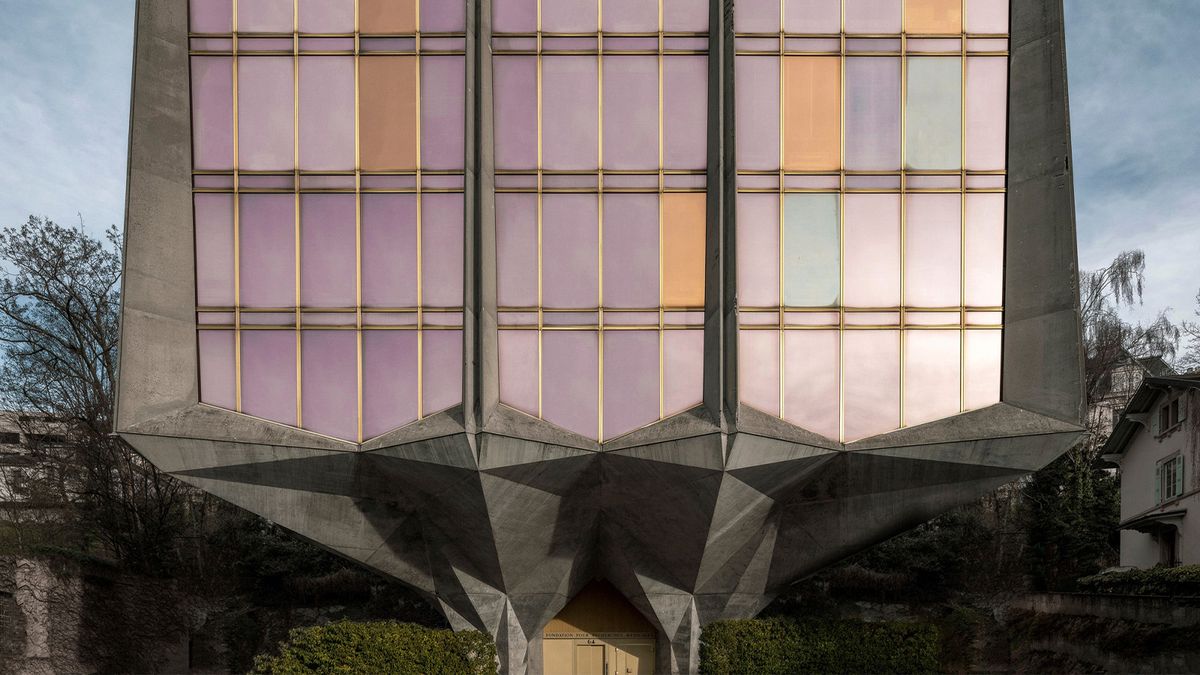
Step inside La Tulipe, a flower-shaped brutalist beauty by Jack Vicajee Bertoli in Geneva
Sprouting from the ground, nicknamed La Tulipe, the Fondation Pour Recherches Médicales building by Jack Vicajee Bertoli is undergoing a two...
-
Guy Bolongaro’s photography approach has an infectious and palpable energy on set. Our recent April 2022 issue shoot was no different, with ...
-
If this summer looks to be one of unrestrained escapism – the lifting of restrictions all but guaranteeing a mass exodus to the beach – so t...
-
It was only a few months after Mork-Ulnes Architects had completed a trio of concrete guest houses for a private client in Northern Californ...