sâmbătă, 12 februarie 2022

New Design Museum exhibition puts waste front and centre

‘Of all the products of human hands, [waste] is the oeuvre that no one wants to own, discuss or preferably even see,’ says Justin McGuirk, chief curator of the Design Museum, as the institution unveils ‘Waste Age: What Can Design Do?’ (until 20 February 2022). Co-curated by McGuirk alongside Gemma Curtin, the exhibition coincides with the UN Climate Change Conference (COP26) and features the work of design visionaries and pioneers of new ways of repurposing and reinventing our relationship with waste. The waste problem Oxford tire pile #1, Westley, California, 1999, from the series ‘Extraction and Landfill’ by Edward Burtynsky. Courtesy Flowers Gallery, London / Nicholas Metivier Gallery, Toronto The exhibition opens with a section titled ‘Peak Waste’, highlighting the environmental and waste cost of mass production. Considering landfills, mass production, and throwaway culture through history and design, the display culminates in a timeline exploring humanity’s relationship with waste from the 1700s until today.  The timeline in particular offers a sense of the urgency of the problem, as the issues of production, consumption and waste become more multifaceted and complex in contemporary history. ‘We must face the problem of waste – we can no longer ignore what happens to things when we get rid of them,’ says Curtin.  Designing with waste Designs in recycled plastic: top, two chairs by Dirk van der Kooij, and light by James Shaw. Above, ’S-1500’ chair, designed by Snøhetta for Nordic Comfort Products and made from discarded fishing nets, and Jasper Morrison’s ’1 Inch’ chair for Emeco, made of industrial recycled waste After walking through data and images that might give visitors a sense of facts-induced doom, the exhibition opens up (literally and figuratively) into a hall filled with ideas, proposals, prototypes and hope. This section, divided into ‘Precious Waste’ (celebrating the designers repurposing leftover materials in their work) and ‘Post Waste’ (exploring ways in which waste can be repurposed for design) is where things turn optimistic, highlighting how designers, makers and creatives are addressing the issue with practical solutions.  ‘Instead of thinking of objects as things that have an end life, this exhibition proposes that they can have many lives,’ says Curtin.  ‘Materialism’ by Drift The pieces on display demonstrate the breadth and depth of the design industry’s involvement in tackling the waste problem, from Formafantasma’s ‘Ore Streams’ investigations to Christien Meindertsma’s ‘Renoleum’ project, to Drift’s ‘Materialism’, the result of ongoing research into materials (from steel and rubber tomato oil and porcelain) and their appearance.  The ‘Precious Waste’ section exhibits range from fashion by Stella McCartney, and Adidas x Parley for the Oceans, to recycled plastic furniture designs by the likes of Soft Baroque, James Shaw and Jasper Morrison for Emeco, and PriestmanGoode’s ‘Zero’ takeaway packaging design. Bricks, tiles and other construction materials are also featured, as are projects that look at repurposing architectural structures in the spirit of adapting and repairing.  ‘Post Waste’, on the other hand, includes the ongoing work by designers who are working with materials such as mycelium, rice husks, fish-farming and agricultural waste. This section includes innovations such as Faber Futures’ ‘Project Coelicolor’, or Fernando Laposse’s agave and corn husk waste furniture.  ‘Design has helped create our wasteful society, and it will be crucial in building a cleaner future,’ says McGuirk. ‘That means rethinking the lifestyles and materials that do so much damage. This optimistic exhibition demonstrates the energy and ingenuity being applied to the challenge – and we want it to mark a turning point. There is so much we can do, but it begins with understanding our waste.’ Specially commissioned installations Aurora, by Arthur Mamou-Mani, in partnership with Dassault Systèmes Aurora by Arthur Mamou-Mani. Photography: Felix Speller Suspended from the Design Museum’s soaring atrium is a 3D-printed modular installation by London-based French architect Arthur Mamou-Mani, a pioneer in additive manufacturing. The architect, who has created 3D-printed architecture for the likes of Burning Man and Milan Design Week, has on this occasion devised a cascading curtain of some 300 modules, printed from bioplastic polylactic acid (PLA), a non-toxic thermoplastic derived from sugarcane. Titled Aurora, it’s an example of how design, science and industry can come together and enable us to produce more sustainably. With gentle variations in form and opacity, the alluringly patterned modules are testament the capabilities of parametric design and 3D-printing; their relatively small size and simple metallic rods that hold them in place ensure that they can be easily dismantled and reassembled at another location, or repurposed as room dividers once the exhibition ends. Spotlights have been strategically placed around the installation, filtering through the translucent modules to create playful patterns of light and shadow across the atrium floor.  An accompanying display on the mezzanine level includes statistics that illustrate the virtues of PLA – compared to ABS, a petroleum-derived thermoplastic, it requires less water, minerals and metals, and comes with less risk of respiratory and carcinogenic effects. A 3D-printer and plastic crusher are installed adjacent, so visitors can witness the modules being crushed, melted and reformed, as PLA is recycled and printed again in a continuous loop. Says Mamou-Mani of the presentation: ‘It’s crucial that designers start thinking beyond the time frame of their projects, where the material came from, where it is going, how it can be reconfigured. The entire lifecycle needs to be taken into consideration. Aurora demonstrates that this is possible today, if only we adjust our thinking.’ Fadama 40, by Ibrahim Mahama Fadama 40, by Ibrahim Mahama Ghanaian artist Ibrahim Mahama, known for transforming materials gathered in urban environments into ambitious installations that explore migration, trade and exploitation, has created a new installation for ‘Waste Age’. Titled Fadama 40, it comprises 40 CRT television sets salvaged from Agbogbloshie, the world’s largest electronic waste dump, situated outside the city of Accra. Agbogbloshie is a consequence of the developed world’s infatuation with the new – in our aggressive pursuit of sleeker, faster, slimmer electronic devices, we rarely hesitate to throw out older versions. Many of our old electronics end up here, imported as ‘secondhand consumer products’, then improperly disposed of, causing widespread pollution and chronic illness. Mahama’s installation, which has the 40 TVs arranged into a gigantic media wall, suggests the enormity of the issue, but also points to the toil and ingenuity of Agogbloshie’s scrap dealers, recyclers and makers. On some of the screens, we see video footage of people using rudimentary methods to extract copper from electric wires, burning the plastic insulation and creating toxic fumes in the process. Mahama has used this recovered copper to create new frames for the TVs, offering physical evidence of the possibility of renewal but also pointing to its human cost. Not enough people take the time to understand the people of Agbogbloshie, explained Mahama in a talk at the Design Museum shortly before the opening of ‘Waste Age’. They have often been stereotyped, their home likened to Sodom and Gomorrah. He hopes that the installation will give visitors a renewed sense of perspective, a greater appreciation for the hard labour that goes into recycling, as well as a heightened awareness of the global implications of our relentless consumption. § 
http://dlvr.it/SJsj61

The World Around Summit 2022 takes us across the globe through architectural debate

What constitutes architectural heritage? How can we reimagine the future? Who or what can be used as an alternative witness of the past? These were some of the questions posed at The World Around Summit 2022. Hosted at the Guggenheim Museum, in collaboration with the Het Nieuwe Instituut, the summit featured a diverse range of thinkers, writers, designers, artists and architects, presenting both in-person as well virtually, including Tadao Ando speaking from Osaka and DAAR from Stockholm.  The first session, titled, ‘Schools, Sneakers, Stories and Other Agents of Change’, was commenced by Lesley Lokko with a reflective and inspiring talk on pedagogy and African futures. Sharing a short film created by a former student, Gugu Mthembu, whose work presents multiple narratives both spatial and feminist, Lokko demonstrated the radical possibilities of an expansive architectural education.  Chapel Sound by Open Architecture. Photography: Jonathan Leijonhufvud  The conversation soon shifted to focus on time, preservation and alternative approaches to history in the second session: ‘Ice, Stone, Sad and Other Archives’. Artist Himali Singh Soin fused magical realism and colonial history to propose ice as an alternative archive and storyteller in the history of the Arctic. Speaking from Beijing, husband-and-wife duo Li Hu and Huang Wenjing of Open Architecture discussed how their recently built Chapel of Sound can ‘coexist and endure the weathering, the harshness of nature’, taking lessons from the nearby eroded section of the Ming Dynasty-era Great Wall.  The last session, ‘Trees, Words, Images and Other Monuments’, questioned what constitutes heritage. Pondering the role of architects in reconfiguring and decolonising our notion of heritage, architect Paulo Tavares asked whether a forest can be considered a monument of the destroyed settlements of the Xavante people in Brazil. Similarly, Sandi Hilal and Alessandro Petti, co-founders of DAAR, expanded our understanding of heritage to include those displaced. Examining the context of Dheisheh Refugee Camp in Palestine, they posed the question of how we can learn from and look at refugee camps ‘as a place where people are able to build their own stories and build valuable life’. Like DAAR and Tavares, Miriam Hillawi Abraham disrupted the Eurocentric view of heritage through the use of fiction and virtual reality in her video game set in the monolithic churches of Lalibela, Ethiopia.  From African Futures Initiative. Image: Fred Swart, Graphic Design In the words of the event’s founder Beatrice Galilee, The World Around summit endeavours to be ‘a first draft of architectural history, an archive and resource for actionable change’. In that spirit of accessibility, this year’s summit and the previous years are all available to watch on the organisation’s website, as well as the Guggenheim YouTube page.   A rescheduled session of The World Around Summit 2022 will be held in Rotterdam at the Het Nieuwe Instituut on 11 June. § Depot Boijmans van Beuningen. Photography: Ossip van Duivenbode, Courtesy of MVRDV The Planet After Geoengineering, 2021. Image: Courtesy of Design Earth
http://dlvr.it/SJs084

Architect Thomas Sandell designs capsule shoe collection for Myrqvist

Swedish architect Thomas Sandell has a multidisciplinary approach to design. The co-founder of the Stockholm-based practice Sandellsandberg, established in 1995, Sandell has worked on significant civic projects, including Stockholm’s Stock Exchange and Gåshaga Brygga (the eastern terminus of the Lidingöbanan light rail in Lidingö), and has also created furniture and design pieces for Ikea, brass specialist Skultuna, heritage leather goods brand Palmgrens, and cameo glass expert Reijmyre.  Now, in a collaboration with Swedish footwear label Myrqvist – a brand that reinterprets traditional styles such as loafers, Oxford and Derby shoes with a Scandinavian twist – Sandell has created a capsule collection that comprises three classic mens’ styles. The shoes make a sublime addition to a tailored ensemble and can equally elevate a daytime look. Put your best foot forward with Myrqvist and Thomas Sandell  Thomas Sandell wears the ‘Ängsjö’ loafers, from his collection with Myrqvist ‘In my profession, I design everything from small products to city plans, always with the same joy and passion, so when asked if I wanted to try my hand at shoe design, my answer was a sound yes,’ says Sandell of his collaboration with Sweden’s fastest-growing footwear label. For Myrqvist, he has created three striking styles, the ‘Ängsjö’ loafer, the ‘Kungsholmen’ ankle boot and the ‘Skeppsholmen’ monk-strap brogue, available in five different fabrications, including flint suede and black calfskin. The styles are united by their emphasis on buckles, which are featured instead of laces. Craftsmanship is integral to Myrqvist’s approach to footwear. The brand – which offers a direct-to-consumer retail model promising premium footwear at a less inflated cost – crafts its shoe styles in Portugal, using calfskin sourced from the Hermès-owned Tanneries du Puy in France and suede from Charles F Stead in the north of England. Placing a focus on made-to-last manufacturing, the label also handcrafts its designs using a predominantly Goodyear Welted construction, with the option of adding a half-rubber sole, an acknowledgment of the harsh Scandinavian climate. §   
http://dlvr.it/SJrfCv

vineri, 11 februarie 2022

Sharp geometries and soft nature meet in this Surrey garden

The right dose of visual tension between the natural and the human-made can breed harmonious results, as this pool house and garden scheme in the depths of Surrey’s countryside demonstrates. A collaboration between London-based architecture practice Surman Weston and local garden architecture and landscape specialist Matthew Childs Design, it includes a finely crafted building and pool platform set in an expansive ‘wild’ landscape that perfectly contrasts with the sharply lined pavilion. The lush greenery extends to the edges of the Surrey garden site, which includes a main private residence that, funnily enough, was once the pool house of a nearby mansion.  It all started when Childs was approached to work on the environment around the main house back in 2019. He invited Tom Surman and Percy Weston to create the pool structure – the two studios had crossed paths before as Surman Weston had designed Childs’ Reigate studio a few years back. The team, which included project architect Hilton Murrell, knew from the start that they wanted to have a unified approach for the overall design, developing architecture and landscape hand in hand, on equal footing. ‘We wanted a really integrated scheme,’ Childs says. Naturalistic Surrey garden and geometric pool house The rectangular swimming pool intersects the concrete terrace, whose circular shape is mirrored by the nearby firepit seating area Yet equal does not mean the same. ‘The landscape has a sort of ruggedness and a wilder feel to it,’ says Surman. ‘We liked the idea of adding a more geometric, bolder centre point to contrast with the landscape – they would enhance each other.’ The architects cite as references Palm Springs’ Frey House II, for its metal roof and austere architecture set against a dramatic natural landscape, and KGDVS’ Solo House in Spain, for its geometries and openness. Meanwhile, Childs drew inspiration from the work of landscape architect Thomas Church, and Frank Lloyd Wright’s iconic Fallingwater. ‘In particular, how contemporary architecture and natural landscape can work in harmony, be given dynamism by moving water and softened with plants,’ Childs explains. Their joint, general principles decided, the team got to work, with garden design and architecture developing independently but in dialogue with each other. The landscaping (constructed by Belderbos Landscapes) borrows elements from the architecture and vice versa. For instance, rounded outdoor seating echoes the shape of the pool house. The pool house architecture appears simple – a Douglas fir timber construction, topped by a light corrugated aluminium roof, and sat on top of a concrete base, which holds the water and transforms into a hardwearing, textured and anti-slip floor inside. The interior contains a main open-plan space for seating around a wood-burning stove, as well as a separate bathroom. Everything is finely crafted (the structure was prefabricated and swiftly assembled on site, featuring bespoke kitchen and cabinetry) and there’s an overarching sense of lightness about the design. ‘We designed it like an outdoor room,’ says Surman. ‘I imagined that the sliding doors would always be open, but equally, in the winter, you can close it off and it’s just big enough to have the fire on and be cosy.’ Built on the site of an existing 1.5m-high retaining wall, the new curved pool house straddles the level change and cantilevers over the woodland Westmorland stone found on site and traces of abandoned water features from the garden’s past lives inspired Childs to create a naturalistic landscape of water and rock. The intention was to make it all look as though it had always been there. ‘Matt came up with this wild scheme that had lots of water, reintroducing waterfalls, cascading into a bigger and then smaller pond that then becomes the concrete disc of the pool and pool house,’ explains Surman. ‘He’s managed to keep an idea of the wilderness that was there before, but he’s injected routes, areas for sitting, a firepit and more.’ The result is perfectly poised and carefully planned but not overly manicured. New mature trees help create the sense that this richly wooded landscape has always been there, while also concealing the pool house from the main home, fostering a sense of discovery. Meanwhile, the sides of the concrete disc that holds the pool house structure cantilever out, extending into the surrounding greenery. ‘Cantilevering over the bank makes you feel like almost all of the landscape around the home is part of the garden,’ says Childs, pointing out this is a technique that has often been used in historical landscape design. ‘In a similar style, we are “borrowing” the views and making them part of our project.’ §
http://dlvr.it/SJrK4C

These affordable engagement rings are both cool and classic

Finding affordable engagement rings under £1,000 doesn’t have to mean a compromise on style. A host of jewellery designers are playing with traditional forms to create pieces that intertwine romantic references with contemporary design accents, making for engagement rings that are both chic and accessible. Covetable and affordable engagement rings Genevieve Schwartz Former Astley Clarke designer Genevieve Schwartz celebrates the naturally beautiful graident of hues in bicolour tourmalines with her Watermelon Sugar Ring. Available in a range of sizes and styles, we love the neat proportions of this one which makes for an affordable and offbeat engagement ring choice. £995; genevieveschwartz.com Ruth Tomlinson Ruth Tomlinson brings a romanticism to engagement ring design thanks to her focus oin textured recycled gold and unique, characterful gemstones. The Diamond Encrusted Wrap band curves delicate strands of gold around the finger, sprinkling them with droplets of yellow gold and delicate white diamonds. £920; ruthtomlinson.com Alighieri Alighieri weaves a romanticism into designs inspired by the lyrical musings of Dante. Its bespoke range of alternative engagement rings coils textured gold around different stones, such as in this ‘Meteor Shower Ring’, which embodies gloriously off-centre design codes. For something similar, get in touch to commission your own piece. £950, alighieri.com Jessie Thomas London-based goldsmith Jessie Thomas focuses on simple silhouettes in her jewellery created from recycled gold. The ‘Three Diamond Ring’ shifts the focus from symmetry, floating three differently sized diamonds in loops of yellow gold. £950, jessiethomasjewellery.com Lark & Berry Lark & Berry’s inclusion of manmade diamonds in its pieces brings an accessibility to designs that may have been formerly out of reach. The ‘Veto Sapphire Slim Ring’ juxtaposes cultured white sapphires against lab-grown diamonds for an arresting take on a classic design. £595, larkandberry.com Completedworks Hypnotising loops of white gold sprinkled with a dusting of white topaz gemstones make for something decidedly different among affordable engagement rings, in this piece from Completedworks. A recycled sterling silver base, coated with gold vermeil, keeps costs down without compromising on style. £255, completedworks.com Delfina Delettrez Delfina Delettrez plays with punkish design in the ‘Two In One Pearl Ring’, linking two classic white diamonds on a bar studded with pearls. This piece, handcrafted in Italy, stays faithful to Delettrez’s distinctive, effortlessly chic designs. €980, delfinadelettrez.com Otiumberg We love Otiumberg for its focus on wearable and accessible designs, a philosophy carried over to a delicate collection of rings. The ‘Diamond Wave Ring’, in 9ct solid gold, lets an elegant twist of nine white diamonds take centre stage, making for an understated and affordable engagement ring. £260, otiumberg.com Sansoeurs The ‘Wife Rose Gold Ring’ from Sansoeurs sets a rectangular pattern of diamonds onto a super-thin band for a modern and minimalist engagement ring, which will look chic when paired with a slender wedding band. £990, sansoeurs.com Shihara Shihara’s pieces encompass a pure simplicity, drawing clean curved and angular shapes in gold, which loop around the body in unexpected ways. The ‘Petite Ring’ encapsulates this aesthetic, sticking to traditional design codes for a perfectly formed, affordable engagement ring. $715, shihara.com §
http://dlvr.it/SJpYK9

joi, 10 februarie 2022

Step into Jorge Zalszupin’s design legacy

Casa Museo Zalszupin is a new cultural space in São Paulo, set within the spaces of Brazilian design icon Jorge Zalszupin’s home. The project was spearheaded by Etel CEO Lissa Carmona, and is managed as a shared initiative between Etel and São Paulo’s Almeida & Dale art gallery. The intention is to preserve the late architect’s heritage, and future plans include an exhibition programme focusing on his local art and design legacy, and the creation of the Jorge Zalszupin Institute in collaboration with his family. Jorge Zalszupin’s São Paulo Home The house still includes original 1960s features, and is camouflaged within a tropical garden characterised by century-old trees and lush greenery. Details of the architecture and decor closely relate to Zalszupin’s furniture designs. A narrow entrance offers discreet access to the house, which opens with an expansive living room whose wave-like pine ceiling references Scandinavian design, while a nearby staircase in jacaranda wood celebrates Brazilian heritage. Vernacular features throughout the house include rustic ceramic flooring and whitewashed walls. The house offers a glimpse into the architect’s life, with his personal office kept intact after his death, and some more decorative elements chosen by his wife, whose taste differed from his modernist aesthetic. ‘He designed it for himself and his family to live in, which gave him the freedom to experiment and combine multiple inspirations,’ observes Carmona. ‘With almost no renovations since its conclusion, it’s a living record of that time.’ Carmona first visited the home in the early 2000s, when Zalszupin invited her to discuss the re-edition of his design works by Etel. ‘He took us to his atelier on the top floor, and we were immediately immersed in his beautiful drawings, art experimentations, and architecture projects, and he showed us how he prototyped his projects using clay,’ she recalls. ‘It was very special, because at that moment we could grasp the grandiosity of his legacy.’ Concerned with preserving this legacy, Carmona decided to create an exhibition to celebrate Zalszupin’s work in design, architecture and art. ‘It was a show woven by the presence in absence, about what remains after all,’ she says. ‘It was a beautiful and successful homage to Jorge Zalszupin, and how the past can coexist with the present.’ The exhibition formed the first steps towards the Casa Museo concept.  In future, the aim is for the museum to become a cultural centre, expanding its scope from exhibitions to education initiatives, seminars, design research and more. An upcoming exhibition celebrating São Paulo’s 1922 Semana de Arte Moderna looks to Brazilian modern art, architecture and design, while later programming will look at the work of Brazilian designer Cláudia Moreira Salles. The year 2022, Carmona notes, marks the centenary of Zalszupin’s birth: ‘We are planning something that overflows the limits of the house,’ she says. §  
http://dlvr.it/SJn2tv

Epson SureColor P706 Cashback Promotion

Get up to $200 cash back when you buy an Epson P706 printer before February 28th!
http://dlvr.it/SJlnR5

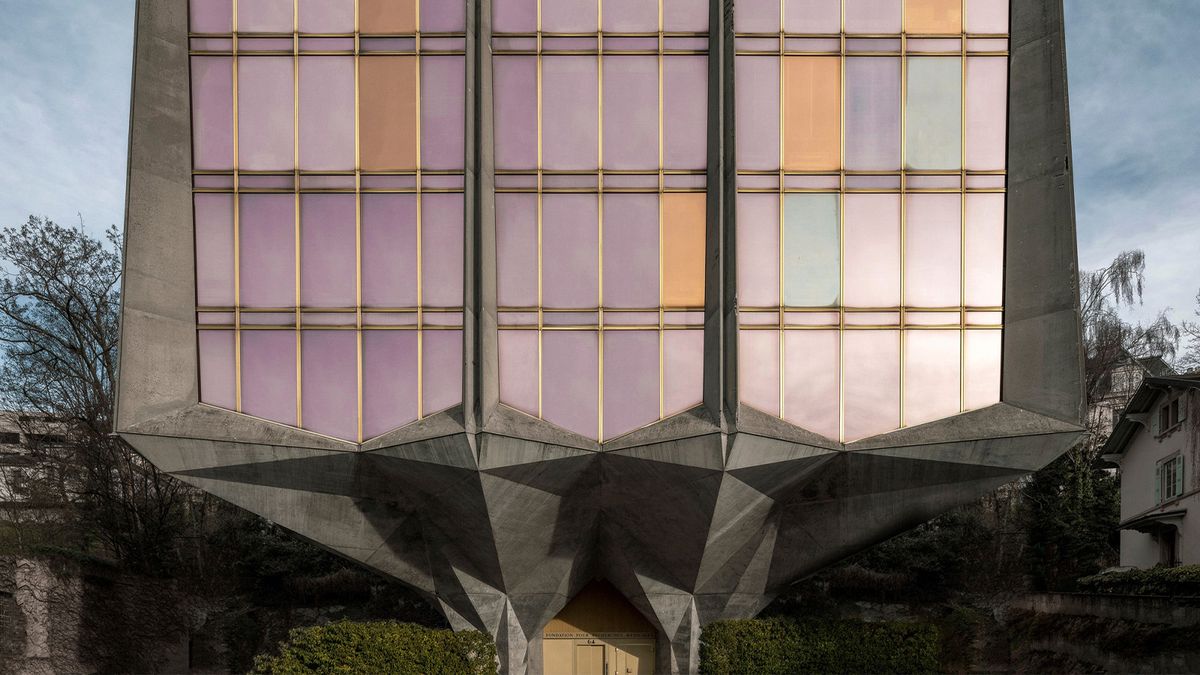
Step inside La Tulipe, a flower-shaped brutalist beauty by Jack Vicajee Bertoli in Geneva

Sprouting from the ground, nicknamed La Tulipe, the Fondation Pour Recherches Médicales building by Jack Vicajee Bertoli is undergoing a two...