marți, 24 mai 2022

New York show explores the legacy of Black women in visual culture

‘Black Venus’, curated by Aindrea Emelife is a story of historic objectification and contemporary reclamation. Held at Fotografiska New York (until 28 August 2022), the exhibition surveys the legacy of Black women in visual culture – from fetishised, colonial-era caricatures, to contemporary image-making, which depicts a renewed agency in Black womanhood. The cross-generational show features 30 artworks by 17 international artists with birth years spanning 1942 to 1997. These include Deana Lawson (recipient of the 2022 Deutsche Börse Photography Foundation Prize), Zanele Muholi, Kara Walker, Carrie Mae Weems, Shawanda Corbett, Ming Smith and Coreen Simpson.  Contrasted with archival depictions of Black women dating back to 1793, the contemporary works – predominantly photography, but also featuring sculpture, mixed media works and film – together create a global survey of the Black female body; its historical ‘othering’, and contemporary empowerment.  Deana Lawson, 2 Live Crew Video Girl (2008). Courtesy of the artist, David Kordansky Gallery, Los Angeles and New York and Sikkema Jenkins & Co, New York ‘By visiting the exhibition and exploring the Black female image from the late-1700s until now, viewers are invited to confront the racial and sexual objectification and embodied resistance that make up a significant part of the Black woman’s experience – and to celebrate the current upheaval of this stereotype, at the hands of Black artists,’ says Emelife.  ‘Black Venus’ is rooted in the image of the ‘Hottentot Venus’, the assigned stage name of Saartje Baartman (born 1789 in South Africa). Baartman, enslaved by Dutch colonisers, was paraded around Europe as part of a ‘freak show’ due to her non-Western body type. These images harbour an unsettling reality and are potent reminders of the colonial exploitation, objectification, racism, and commodification endured by Black people. The show acknowledges the tribulations of and pays homage to Black female icons throughout history, while optimistically reflecting on the socio-cultural shifts in Western perceptions of Black women. ‘In an age where Black women are taking positions in power, fronting the covers of fashion magazines, and taking up space in all manner of fields and industries, it is a reminder to look back and see how far we’ve come, so we can look to the future,’ Emelife explains.  ‘“Black Venus” is a feeling. It is a valiant call to action to be seen and to celebrate in Black women; their aspirations, convictions, contributions and how perceptions of Black womanhood have shifted over time – how agency has been reclaimed,’ says Emelife. ‘This exhibition is a celebration of Black beauty, an investigation into the many faces of Black femininity and the shaping of Black women in the public consciousness – then and now.’ § Coreen Simpson, Black Girl with Eye, (1992) from About Face series. Courtesy of the artist
http://dlvr.it/SQyp7h

duminică, 22 mai 2022

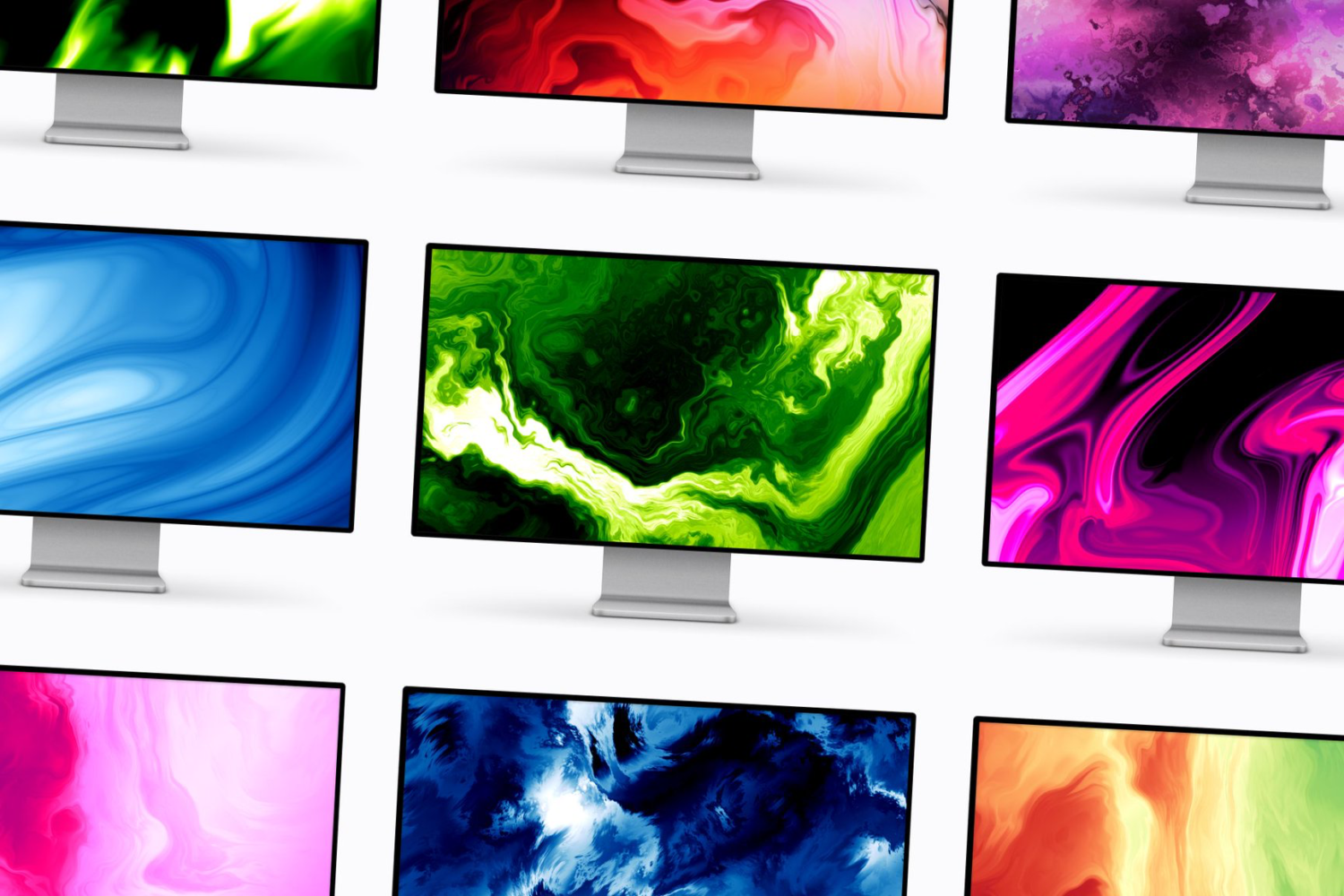
Colorful, fluid wallpaper pack for Apple devices

The output of a creative image creation app, these 8K fluid wallpapers are large enough for the highest resolution desktop monitors or smaller devices.
http://dlvr.it/SQrZ7X

luni, 16 mai 2022

Review: Larry Bell saturates senses and bends perception at Hauser & Wirth London

Larry Bell knows how to cut through the noise. At Hauser & Wirth London, the American artist’s show ‘New Work’ involves three essential ingredients: volume, colour and light. When combined, this is a recipe to test the very limits of optical and spatial reality.  Bell was an early bloomer in art, already securing international cult status by his thirties (in 1962 Marcel Duchamp paid a visit to his studio; in 1967, he appeared on The Beatles’ iconic album cover for Sgt. Pepper’s Lonely Hearts Club Band ). He soon became one of the key figures associated with the Light and Space movement, a group of predominantly California-based artists – including James Turrell, Helen Pashgian and Robert Irwin (Bell studied under the latter at what was then the Chouinard Art Institute) – who sought to change, and challenge, human perception. This futuristic wave of art was characterised by light experiments, science-infused optical manipulations and the reimagining of environments and utilised the new array of materials and technologies that emerged in the mid-20th century.  ‘Larry Bell. New Work’, Hauser & Wirth London, 13 May – 30 July 2022, Photo: Alex Delfanne, © Larry Bell, Courtesy the artist and Hauser & Wirth ‘Larry Bell: New Work’ At Hauser & Wirth London is part of a transatlantic moment for the octogenarian artist. At Dia Beacon, New York, Bell is presenting seminal early sculptures presented alongside a new diptych conceived for Dia. It’s also part of a larger moment for the Light and Space movement (most recently at a seminal survey show in Copenhagen), and its legacy in the contemporary demand for experiential, so-called ‘immersive art’.  Bell is an artist who operates on the cusp of what the eye can take, and what the mind can accept as physicality. His output since the 1960s has been nothing short of prolific, traversing everything from works on paper to furniture design. But occupying the cutting edge of optical perception has required a career-long dedication to technological refinement, and a heady dose of science. Since 1969, Bell has worked with a machine he refers to as ‘The Tank,’. It has allowed him to alter the properties of glass through thermal evaporation technology developed for aeronautics and optics. In essence, the process deposits films of vaporised metallic and non-metallic substances onto glass panes without interfering with the glass’ fundamental characteristics.  Larry Bell, Deconstructed Cube SS 2021 Sand and Zinc laminated glass coated with stainless steel and titanium. © Larry Bell. Courtesy the artist and Hauser & Wirth The show at Hauser & Wirth features Bell’s Deconstructed Cube and Open Box series, which position glass not only as a material but as an active force that can simultaneously transmit, reflect, and absorb light; a mirror and a window. At odds with the tropes of austere minimalism, there is something alive in Bell’s works. The experience is sensory saturation, a collision of right angles, colours and planes through maze-like, translucent, unpredictable and spectral constructions. It’s overwhelming, certainly, but endlessly intriguing.  The smaller works in this show, elevated on head-height pedestals, are no less confrontational. Despite their vacant innards, they occupy their space and stand their ground. They are not to be looked at, but looked in, and walked around – they require your body, your eyes, and your open mind.  Two larger works are placed on a raised carpeted bed, not unlike the sort that might elevate a church altar. Perhaps sanctity isn’t too far from the equation here. These pieces exist in-between worlds; their currency in their illusion; how volume can be so heavily implied, without needing to exist. § ‘Larry Bell. New Work’, Hauser & Wirth London, 13 May – 30 July 2022, Photo: Alex Delfanne, © Larry Bell, Courtesy the artist and Hauser & Wirth Larry Bell, Deconstructed Cube SS 2021 True Fog, Mist, and Zinc laminated glass coated with silicon , Photo: Jeff McLane, © Larry Bell . Courtesy the artist and Hauser & Wirth TRIOLITH B
, 2021
, Amethyst and Mist laminated glass coated with inconel and quartz
30.5 x 30.5 x 81.3 cm / 12 x 12 x 32 in. Photo: Jeff McLane    
http://dlvr.it/SQSS0Q

duminică, 15 mai 2022

Maison Intègre celebrates Burkina Faso craftsmanship with debut collection

Three years since we were first introduced to the exquisite work of Maison Intègre, a metalsmithing workshop and foundry based in Burkina Faso, its mission to preserve and honour the legacy of West African craftspeople and artisans feels more relevant than ever. At New York Design Week 2022, the New York-based design gallery Les Ateliers Courbet presents Maison Intègre’s first-ever limited-edition collection (on view until 26 July 2022), which brings together international designers and artists in residence with Maison Integre’s community of artisans. The inaugural collection kicks off with a series of bronze pieces, created in collaboration with the French designer Noé Duchaufour-Lawrance, and reveals a well-rounded offering that includes tables, lighting, wall sconces and a chair. Maison Intègre: a journey through West African culture Maison Intègre was founded in 2017 by Ambre Jarno, a former television executive who lived in Burkina Faso from 2012 to 2014. The workshop and foundry is based in Ouagadougou and its artisans continue to work using the lost wax bronze casting technique, which has largely remained unchanged since its inception millennia ago. The studio completed a comprehensive workshop space this year, enabling it to support the work of 15 artisans and provide them with livelihoods, while also preserving the region’s craft traditions.  While this is not the first time Maison Intègre has brought an international designer in to work with the team in Burkina Faso – we instigated a collaboration between Maison Intègre and the American designer Brendan Ravenhill in 2019 for Wallpaper* Handmade – this partnership with Duchaufour-Lawrance pushes the envelope further. The designer was invited to spend an extensive amount of time immersed in Ouagadougou, in order to create contemporary designs that honour Burkinabe culture and traditions. ‘This project was a journey through West African culture. I wanted to pay homage to the beauty of what I found along my path,’ says Duchaufour-Lawrance, who made many trips to Burkina Faso over the course of two years. ‘One image that I have kept in mind is from when I travelled in Mali – discovering some treasures at the Bandiagara cliffs, where I saw the Dogon ladders that inspired the “Y” lamp. Ambre showed me pictures of houses made of rammed earth, with their oblong geometry and their slightly recessed roofs. Those inspired the “Kassena” tables.’ Duchaufour-Lawrance’s seven-strong collection marks the first time Maison Intègre has brought a full collection to life. There is a clear line drawn between each of the designs and a West African motif; the wall sconces feature mask-like shapes, and there’s a pared-down spin on the palabre chair – a West African mainstay mostly seen in courtyards and under trees. Duchaufour-Lawrance, Jarno and the Burkinabe bronzesmiths worked collaboratively to sculpt the beeswax moulds used to cast the final bronze pieces – everything is formed and done by hand, and this bestows the pieces with a sensual quality.  Duchaufour-Lawrance explains the magic of the material perfectly. ‘In the hands of the artisans I met in Ouagadougou, the bronze is getting another life. The material seems like it’s vibrating, playing with the light with its irregularities from all the process it has been through. ‘All of these elements give it a singularity and its own patina, [which is specific to] the objects that Maison Intègre produces there.’ §  
http://dlvr.it/SQRSnk

Discover Greek wines this summer on these island wine trails

Among Greece’s many gastronomic wins – olive oil, feta, filo, yogurt – there is rarely a mention of wine. Yet, a renaissance is happening among Greek winemakers, many of whom are using modern vinification methods and technologies to transform the country’s 300 indigenous grape varieties into a unique range of wines.  In an effort to promote Greece’s burgeoning vineyards, London-based chef and founder of Hide restaurant, Ollie Dabbous, has worked with the country’s tourism board to produce a series of wine trails. Spread over four islands – Tinos, Mykonos, Paros, and Santorini – the trails explore the unique viticultures of each region and offer a new way to explore the Greek islands. Greek islands wine trails  1. Tinos T-oinos winery Among Tinos’ whitewashed villages and craggy granite landscapes is T-oinos winery. Its founders, Alexandre Avatangelos and Gérard Margeon, created T-oinos in homage to a vineyard that had existed on that same land 6,000 years ago. Yet, the wine they have been producing ever since is distinctly modern.  The vineyard specialises in two varieties of grape – Assyrtiko, a white-skinned grape with citrus and floral notes, and Mavrotragano, a deeply flavourful grape whose name literally translates to ‘black’ and ‘crispy’. Visitors to T-oinos can sample the fruits of these varieties during a bespoke wine-tasting session. In addition, the winery offers a walking tour covering the history of winemaking on the island and a visit to its ancient wine press.  toinos.com 2. Mykonos Mykonos Vioma Organic Farm & Vineyard The famously glamourous island of Mykonos is home to some high-profile vineyards. Mykonos Vioma Organic Farm & Vineyard is a prime example. Located on the site of a former monastery, the biodynamic vineyard produces red, white, and rosé wines that can be enjoyed alongside a tasty mezze platter at the on-site restaurant.  For a more active adventure, the vineyard also offers biking tours and tzatziki-making courses.  mykonosvioma.com 3. Paros  Moraitis Winery Moraitis is a fourth-generation winery known for cultivating rare varieties of grape indigenous to Paros island. Visit the winery and enjoy a tasting session in the sun of Moraitis’ red and white varieties alongside a spread of cheeses from neighbouring island Naxos.  moraitiswines.gr 4. Santorini Gavalas Winery Santorini is without doubt the crown jewel among Greek wine islands. While there is a variety of vineyards worth visiting, Gavalas Winery is considered one of the best. The vineyard has been producing wine for more than 300 years and is the only winery in Santorini that vinifies the indigenous rare varieties of Katsano and Voudomato grapes.  Tasting sessions of nine different wines can be had in the picturesque courtyard or the roof garden. §
http://dlvr.it/SQRSlw

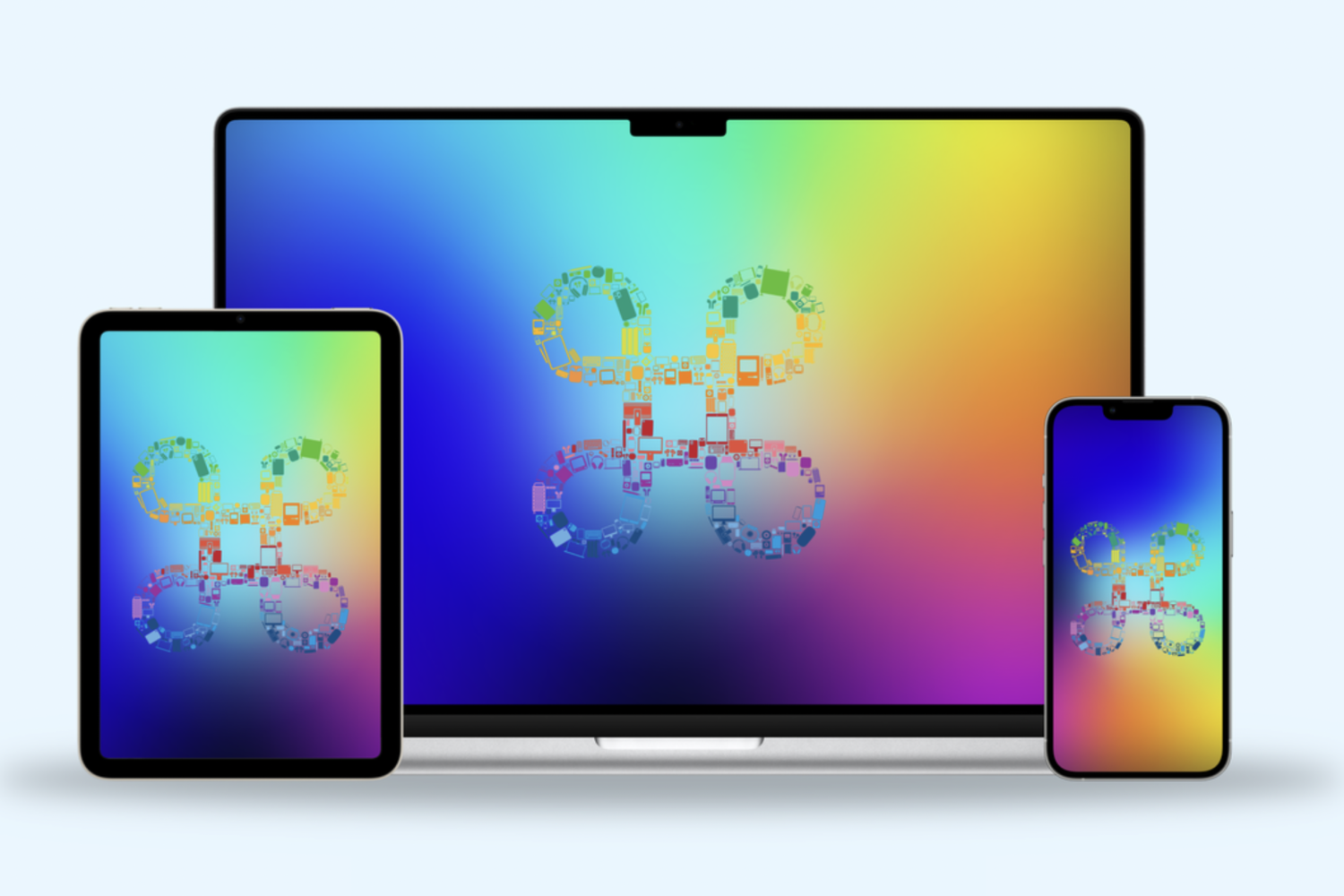
“Commander” wallpaper pack for iPhone

Honor the Apple-only Command keystroke with these "Commander" wallpapers for iPhone.
http://dlvr.it/SQPz5p

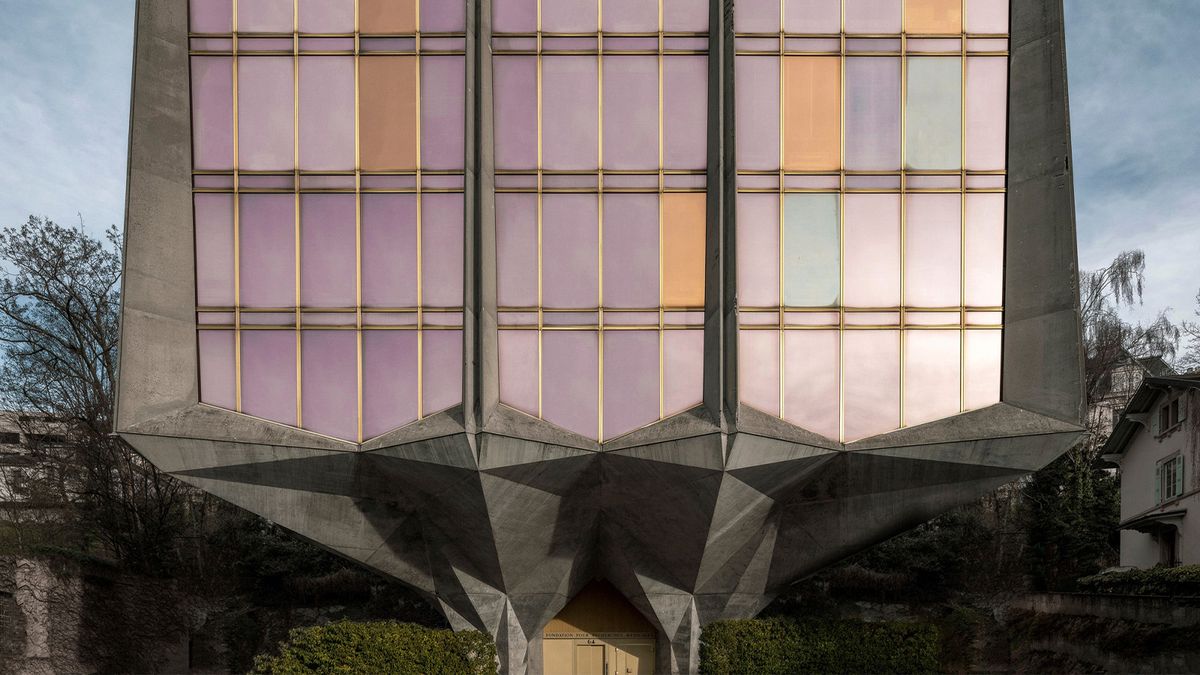
Step inside La Tulipe, a flower-shaped brutalist beauty by Jack Vicajee Bertoli in Geneva

Sprouting from the ground, nicknamed La Tulipe, the Fondation Pour Recherches Médicales building by Jack Vicajee Bertoli is undergoing a two...