According to legend, 11 February is the date on which Emperor Jimmu founded Japan in 660BC. National Foundation Day (Kenkokukinen-no-Hi) is an annual public holiday celebrating the achievements of Japan’s forebears who contributed to the dynamic blend of rich tradition and contemporary innovation Japan is known for today.
To mark the occasion, we revisit recent Wallpaper* features on some of Japan’s leading contemporary artists, and art moments, those pushing the boundaries of their respective media, and taking the international art landscape by storm.
Kazuhito Kawai’s deliberately deformed kaleidoscopic creations
Kazuhito Kawai holds a collapsed work in his Kasama studio, photographed by Takashi Homma for the March 2022 issue of Wallpaper*, on newsstands now and available to subscribers
For the March 2022 issue (on newsstands now and available to subscribers), writer Minako Norimatsu spoke to rising star ceramic artist Kazuhito Kawai about his deliberately deformed kaleidoscopic creations. The Kasama-based artist, whose otherworldly works draw on everything from plastic surgery to J-pop and 1990s culture, fashion and film, has just opened a new show of work at Steve Turner Gallery, LA ‘The feeling of not fitting in always urges me to create,’ he says. ‘I was not destined for making regular pottery, and my hands opted to deform vessels into something non-functional.’
READ MORE
Chiharu Shiota on interweaving the past lives of found objects
Japanese multimedia artist Chiharu Shiota, photographed by Sunhi Mang in April 2019 in her Berlin studio
Back in June 2020, we invited Japanese multimedia artist Chiharu Shiota to take part in our At Home With profile series. Wallpaper* editor TF Chan wrote of the artist’s work: ‘Chiharu Shiota’s installations, often involving everyday objects entangled in a sea of blood-red, black or white yarn, leave a searing impression in the minds of viewers; not only for their exceptional beauty but also because of the poignant way in which they represent personal narratives and articulate complex feelings of longing and loss.’ Shiota is now preparing a full-scale art takeover of Copenhagen’s iconic subterranean Cisternene – watch this space!
READ MORE
Izumi Kato’s haunting humanoids
Inside Izumi Kato’s Tokyo studio with work for his 2021 show at Perrotin New York. Photography: Yuu Takagi. © 2021 Izumi Kato. Courtesy of the artist and Perrotin
The work of Izumi Kato falls somewhere between a sci-fi future and ancient history. Last year, the artist took over two floors of Perrotin New York’s Lower East Side space. Ahead of the show, we were offered a behind-the-scenes look inside the artist’s Tokyo studio, where his haunting humanoids and Sphinx-like paintings and sculptures were coming to life. As the artist told Wallpaper’s US editor, Pei-Ru Keh, ‘I am aware that the human form I paint is not a specific person, but instead, I am using a person’s shape to paint. It could be you, and it could be me. I don’t know who it is. Using such an anonymous person, I am not focusing on the individual, but on the being itself.’
READ MORE
The Ube Biennale: a template of public sculpture in Japan
Sato Keiichi, The space in the grandfather’s nostril, 2013. © Andrea Katsuya, courtesy Ube Biennale 2020
In 2020, journalist Tom Seymour travelled to the once little-known city of Ube to explore how this industrial powerhouse transformed into Japan’s sculptural hub. This evolution was largely due to one, key and longstanding event: the Ube Biennale, founded in 1961 and one of the world’s first contemporary sculpture festivals. Seymour notes, ‘The sculpture islands of Naoshima, Teshima and Inujima in the Seto Inland Sea are now world-famous tourist destinations, instantly recognisable from omnipresence on Instagram. Also more famed is the Hakone Open Air Museum, which opened in 1969 close to Mount Fuji, the Noguchi-designed Moerenuma Park in Hokkaido, the northernmost island of the country, and the Kirishima Open-Air Museum in Kagoshima, on the southern-most island of Kyushu. Ube was the inspiration for each.’ The 29th edition of the Ube Biennale will take place in 2022.
READ MORE
Ryoji Ikeda’s multisensory assault course
Ryoji Ikeda, point of no return. © Jack Hems, 180 The Strand, 2021
Emerging from the industrial brutalist labyrinth that is London’s 180 The Strand, it’s customary to feel like your senses have been through the wash a few times. But after artist Ryoji Ikeda’s solo show in 2021, your eyes could hear, and your nose could see. Ikeda didn’t politely request our attention, he got inside our heads and played our eardrums like snares. This did not feel like an exhibition, it felt like a sensory assault course that one did not view, one survived. Presented by The Vinyl Factory and Fact magazine in collaboration with Audemars Piguet Contemporary, this was Ikeda’s largest show in Europe to date. Five years in the pipeline, it featured six global premieres and five works shown in the UK for the first time.
READ MORE
§
http://dlvr.it/SJlZlz
joi, 10 februarie 2022
Introducing the March 2022 Style Issue of Wallpaper*
Welcome to the March Style issue, which is dedicated to fantasy, enjoyment and indulgence.
Gracing our limited-edition subscribers’ cover is Julien d’Ys – the influential and iconic hair stylist – who has created a unique series of surrealist sculptures exclusively for Wallpaper*. He has been one of the fashion industry’s great renegades since the early 1980s, has collaborated with Comme des Garçons’ Rei Kawakubo for decades, designed wigs for the Metropolitan Museum’s Costume Institute, created Linda Evangelista’s bob (which she credits with quadrupling her rate), and the hair on Madonna’s Re-Invention tour, as well as working with some of fashion’s greatest photographers, such as Irving Penn, Peter Lindbergh, Annie Leibovitz and Paolo Roversi. Redefining himself as an artist, he fully immersed himself in this project – ‘I think people need to dream more. To see more beautiful things.’
We take a front-row seat at Chloé, which, under Gabriela Hearst, has discreetly become a sustainability powerhouse, rethinking supply chains, upcycling materials, and collaborating with social enterprises, to set an example for luxury fashion brands of tomorrow.
Over in Piedmont, we reveal the inner workings of outerwear behemoth Herno, and talk to CEO Claudio Marenzi about expanding the business while adopting eco-friendlier materials and procedures.
We celebrate our pick of the best emerging US designers, and go tête-a-tête with German artist Alexandra Bircken, whose ambitious, contemplative installations invoking the human body reflect her background in fashion design.
Meanwhile, Jiamini, a Kenya-based accessories and fashion label made by women for women, is likewise inspired by the body, with a bold new collection featuring a spine motif. The brand is a pioneer in ethical luxury, sustainable design, contemporary craft, modernising tradition, and offering access to opportunities for female workers. Deservingly, it has just been picked up by a UN accelerator for ethical fashion.
We also take you to paradise with our ultimate piña colada (with a cherry on top, of course), embrace tan lines, showcase day-to-night beachwear, flaunt a pair of shimmering cross-laced Dior boots, and luxuriate on a bold sun lounger. As Wallpaper* fashion director Jason Hughes says: ‘I wanted the fashion to be full-on – colourful, exuberant, kaleidoscopic, energetic, upbeat, fun, sexy and vibrant. This is the space we’re in for the season. Let’s escape, dress up, party, have a cocktail and a dance.’
Finally, what better way to end than with Mickalene Thomas’ duck with chimichurri. ‘The recipe is delicious and reminds me of my travels,’ she says. I hope you enjoy!
Sarah Douglas
Editor-in-Chief
http://dlvr.it/SJl4Kc
Sir David Adjaye scoops inaugural Charlotte Perriand Award
Architect Sir David Adjaye has been announced the recipient of the 2022 Charlotte Perriand Award. The honour, which forms part of the annual series of Créateurs Design Awards (which include categories such as Best Residential Project, Best Commercial Project and Best Product Design), is the first of its kind, with Adjaye scooping the inaugural prize dedicated to design trailblazers – just like legendary French creative Charlotte Perriand.
The new Charlotte Perriand Award has been founded in memory of the iconic French architect and designer. ‘This is the first time the Perriand family has allowed her name to be used beyond her immediate work,’ the organisers point out, as Perriand’s daughter, Pernette Perriand-Barsac, celebrates Adjaye’s win: ‘When I read [Adjaye’s] words in the press or his approach that he describes on social networks, I see how great [his and my mother’s] proximity is, to the point that a real dialogue takes place beyond time.’
Image: Gary Dadd
Says Adjaye: ‘[Charlotte Perriand] was really expansive in thinking about what the profession could be and understood the role of designers in their responsibility toward making the 21st century as beautiful and as empowering and as edifying [as possible] for people of all races – and for our human civilization to thrive.’ Recent projects by Adjaye Associates include the Cherry Groce Memorial Pavilion in Brixton, London, and 130 William in New York, while an extensive list of upcoming schemes features works such as the Africa Institute in Sharjah.
Ghanaian-British architect Adjaye is widely celebrated in his industry and beyond, having received a slew of honours, from his 2017 knighthood to the 2021 Royal Gold Medal (he was the first Black architect to receive it). Contributing to a better society and helping create positive change through design excellence are goals that form part of Adjaye’s practice – and values shared by Perriand, making this award a fitting recognition of the acclaimed architect’s important body of work. §
http://dlvr.it/SJjzkg
miercuri, 9 februarie 2022
Lacaton & Vassal houses for sale flag sensitivity and experimentation
Pritzker Prize 2021 winners Anne Lacaton and Jean-Philippe Vassal are revered for their humble, exploratory take on architecture. The duo have headed Paris-based studio Lacaton & Vassal since 1987, and are critically acclaimed for their work in housing, in particular, such as their multi-family projects that display a gentle, considerate approach and sustainable architecture; they are also behind a slew of private single-family homes too. And two of these Lacaton & Vassal houses have now gone on the market in France – the 1993-built Maison Latapie in Floirac, and 1999’s Maison Floquet in Bordeaux.
Maison Latapie was among the first of just six private houses completed by the studio. Experimental and refreshing, the house ‘embodies their radically new approach to housing, based on an economy of resources pushed to the extreme’, says Aurélien Vernant, director of Architecture de Collection, the real-estate specialist that is looking after the sales. Designed to be flexible, economical, and sustainable, Maison Latapie is a house that well represents Lacaton and Vassal’s overall approach.
Lacaton & Vassal houses: ‘open to life’
Maison Floquet
The two architects seek to develop ‘building systems that give freedom, like in other times the Dom-Ino house or apartment buildings of Le Corbusier, the ecological houses of Frei Otto in Berlin’, Vassal has said of their residential work; such elements are on display within these two homes.
Maison Floquet offers an alternative premise, being the transformation of a former cookie factory into a family home. But even with a different starting point, Lacaton & Vassal’s approach remains consistent, drawing on iconic loft spaces and reclaimed industrial sites to compose a bright home with an open, airy, light-filled central courtyard at its heart. ‘This pragmatic, ecological and inventive approach, which reinterprets “what is already there” with simplicity and finesse to maximise its uses, earned them the Equerre d’Argent award in 2011 for their rehabilitation of the Tour Bois-le-Prêtre apartment block,’ say the estate agents.
‘Good architecture is open – open to life, open to enhance the freedom of anyone, where anyone can do what they need to do,’ Lacaton said, following the pair’s 2021 Pritzker Prize win. ‘It should not be demonstrative or imposing, but it must be something familiar, useful and beautiful, with the ability to quietly support the life that will take place within it.’
These two homes certainly showcase this ethos, and are a true representation of Lacaton & Vassal’s architecture of gentle dynamism and experimentation. §
http://dlvr.it/SJjXjF
Portable lights to beat the January blues
Browse our edit of the best portable lights and rechargeable lanterns to brighten up your home and garden. Designed by some of today’s most brilliant creative minds in collaboration with leading lighting brands, these portable lamps are the perfect adaptable companions for your everyday needs, perfect to add a bit of confort to your home, and able to swing between home and (home) office with impeccable ease.
Portable lights: Wallpaper* picks
‘Goodnight’ by Philippe Starck for Kartell
For his lighting debut with Kartell, Philippe Starck was inspired by the romantic glow of a candle to create a smart portable light that is minimal as it is high tech. ‘The light of a candle is the most beautiful, natural and almost the first light of our civilization,’ says Starck. ‘But sadly modernity does not like candles. With Goodnight, [we] reinvent this iconic pure light to warm our dreams.’
kartell.com
‘Bellhop’ portable light by Barber Osgerby for Flos
Photography: Scheltens & Abbenes
Originally designed for the Design Museum’s restaurant and inspired by a simple formal intuition, Barber Osgerby’s ‘Bellhop’ lamp for Flos is a small but mighty portable light. The flexible, rechargeable lamp now features brand new bright shades – yellow and grey-blue – which light up the product’s existing rich palette of red, white, grey and brown. The compact portable light lasts up to 24 hours between charges, and the designers selected edge-lighting technology that ensures an evenly lit surface. ‘Bellhop’ also includes anti-glare glow and a dimmer to modify the light’s intensity from ten to 100 per cent.
flos.com
’Pencil’ illuminating module by Zafferano
A battery operated, portable and rechargeable light module, ’Pencil’ by Italian lighting company Zafferano can be adapted to become a floor, table or hanging light. A simplified design featuring an elongated pentagonal form with LED light combined with white, corten or dark grey painted extruded aluminium, it features a 4-point dimmer to adjust the light’s intensity and warmth. Available in three sizes, this portable light also features accessories such as a charging floor stand that places it at a slanted angle, table bases to hang over a desk or dinner setting, or hooks for ceiling suspension (although it works just as well as a lone module, leaning on a wall or placed on a table for a more minimalist effect).
zafferanoitalia.com
‘Pepa’ by Francesco Faccin for Astep
Italian designer Francesco Faccin was inspired by the movement of a pepper grinder to create this wireless portable lamp for Danish lighting brand Astep. As you would twist a pepper grinder to finish a dish, the ‘Pepa’ rechargeable lamp is switched on by twisting (the action also adjusts the light intensity). Made of a solid wood body concealing a technological soul (featuring a sophisticated multi-axis magnetic field sensor technology that eliminates the need for wiring), the tactile lamp is a marriage of craft and innovation. It’s a design that exemplifies Astep’s approach to lighting: founder Alessandro Sarfatti creates meaningful pieces that celebrate the design heritage of the lighting industry while looking to its future.
astep.design
‘Sylvestrina’ by Enric Sòria and Jordi Garcés for Santa & Cole
A 1974 design revisited to fit with contemporary life, Enric Sòria and Jordi Garcés’s portable lamp design for Spanish lighting company Santa & Cole was originally conceived with the intention to reproduce the effect of an oil lamp. After nearly five decades, the simple formality of the ‘Sylvestrina’ lamp is updated as a rechargeable lamp that preserves the original’s warmth with the added practicality of LED technology and long-life battery.
santacole.com
Daphinette by Tommaso Cimini for Lumina
Lumina founder Tommaso Cimini’s ‘Daphinette’ table lamp is updated as a new portable version. The simple lamp is defined by a decisively industrial aesthetic, with an articulated arm holding a pivoting diffuser and mounted on a transformer, and its new version features a limited edition red inspired by the holiday season. Cimini’s ‘lots of light, little lamp’ motto for Lumina is exemplified by the essential design of this portable lamp, with performance and durability at the heart of the design.
lumina.it
‘Setago’ portable lamp by Jaime Hayon for &Tradition
Spanish designer Jaime Hayon was inspired by Japanese lanterns and the shape of mushrooms for his ‘Setago’ series of portable lights for &Tadition, offering up to ten hours of warm illumination. Inspired by the possibilities of a cordless lamp design, Hayon kept his design’s silhouette minimal and uncluttered, playing with colour combinations including blue and cream (pictured), beige and green and rust with grey, enriched by a discreet brass dimmer.
andtradition.com
‘Arca’ by Philippe Malouin for Matter Made
Philippe Malouin continues his collaboration with Matter Made with the new ‘Arca’ portable lamp. Developed as a multifunctional rechargeable light, it features a 110lm LED module and promises up to 30 hours of use depending on the setting (which can be selected from night, ambient, reading or task). Demountable to easily pack and take it on trips, it’s the perfect flexible light, ‘from bedside to bath-side’.
mattermade.us
‘Folia’ portable lamp by Saint-Louis
Photography: Jonas Marguet
The ‘Folia’ collection of lanterns is inspired by the patterns from the forests surrounding the Saint-Louis crystal manufacture. Its design is defined by the contrast between the smooth wooden top and geometrically cut crystal, its organic bevel-cut patterns created as an homage to the Moselle woodland. The portable lights are suitable for indoor and outdoor use, and can last up to 25 hours between charges. The perfection of the crystal craft is evident when the lantern is on, casting a charming, enigmatic patterned shadow on its surroundings.
saint-louis.com
‘Salt&Pepper’ portable lamp by Tobias Grau
A classic hourglass form conceals the advanced cable-free technology in these compact portable lights by German lighting design specialist Tobias Grau. Fully portable with no compromise on intensity, the ‘Salt&Pepper’ lamp presents a literal beacon of light, comfort, and kinship. Offering eight hours of light when on full power (increasing to up to 100 hours when used with the touch dimmer option), the lamp is recharged via USB-C cable.
tobiasgrau.com
Lanterns by Zanellato Bortotto for Louis Vuitton Objets Nomades
Italian designers Daniele Bortotto and Giorgia Zanellato have created a duo of rechargeable lamps for Louis Vuitton Objets Nomades, featuring a blown glass dome diffusing light through the intricate leather pattern of the shell. Characterised by a honeycomb pattern made of interwoven strips of Louis Vuitton leather, the lamp also includes details inspired by the maison’s bags, such as a practical carrying strap and three brass feet protecting the leather. ‘A journey east, a summer dinner with friends, a walk on the beach: we imagined this project as a collection of memories woven into a lantern,’ say the designers. ‘An intimate and personal object to keep with you to gently illuminate precious moments.’
louisvuitton.com
‘Nui Mini’ outdoor portable lamp by Meneghello Paolelli Associati for Luceplan
Part of a family of outdoor rechargeable lamps comprising floor and wall lighting defined by simple geometric compositions, the ‘Nui Mini’ portable lamp by Luceplan is an outdoor table lamp whose rechargeable nature makes it perfect for an evening in the garden. Featuring a transparent crystal base and a top available in three colours (white, greige and sand), this elegant, dimmable light seamlessly transitions from terrace to indoors.
luceplan.com
‘PC’ portable light by Pierre Charpin for Hay
Suitable for indoor or outdoor use, Pierre Charpin’s ‘PC’ portable light for Hay is updated with a colorful palette. Featuring a composition of shapes characteristic of Charpin’s work, and a chromatic arrangement referencing Memphis colours, the battery-powered light’s injection-moulded plastic body is completed with a matte finish that is both scratch- and water-resistant.
hay.dk
‘Haute’ by Federico Peri for Purho
Designer Federico Peri’s ‘Haute’ portable light bridges innovation and tradition. Working with Murano glass artisans, Italian manufacturer Purho has been developing a new approach to an ancient craft. ‘Haute’ takes this collaborative method to the next level: Peri experimented with glass textures and minimal contemporary shapes to reinterpret the ancient craftsmanship traditions. The rechargeable glass lamp is the result of Peri’s research around the theme of glass engraving, with techniques such as banding, pleating and ribbed excavations creating three different models. Inside, the lamp’s technology merges with more artisanal marvels, with a multilayered coloured glass composition (called ‘murrina’) which adds depth to the illumination. The final effect, the designer explains, is like ’a soul is suspended inside’.
purho.it
‘Mūn’ rechargeable lantern by OEO Studio for Stellar Works
This rechargeable lamp’s design combines Asian aesthetic sensibilities with Danish design practice OEO’s signature timeless aesthetic, packaged in a practical portable lamp. Designed to be ‘playful, analogue and sculptural’, the ‘Mūn’ lantern’s design marries essential form and function and is part of a larger family of lighting accessories. Its name references the Japanese word for moon, and its sophisticated appearance mimics its subtle movement.
stellarworks.com
‘Bontà’ by Davide Oldani for Artemide
The ultimate combination of light and gastronomy, chef Davide Oldani’s ‘Bontà’ light conceived for Artemide is intended as a tool for conviviality. The rechargeable light bottom is topped with bowls of different shapes and sizes, to combine serving food with illuminating the table. ‘Bontà is not a decorative element,’ says Oldani. ‘It creates an atmosphere, it supports and enhances food, it is open to welcome different shapes of containers.’
artemide.com
‘FollowMe’ by Inma Bermúdez for Marset
Portable in name and spirit, these classic rechargeable lamps by Inma Bemúdez for Marset comes back in a new palette of pastel hues. This small lantern’s playful spirit makes it a perfect indoor or outdoor lamp, adding a touch of after-dark whimsy and serenity.
marset.com
‘Easy Peasy’ by Luca Nichetto for Lodes
Italian designer Luca Nichetto has created this series of doll-like portable lights for Lodes. With a combination of jewel tones and smoked glass concealing the light source, the rechargeable lamps are playful and practical. Lightweight and dimmable, Nichetto’s characterful designs are intended to enrich a domestic environment, or to add a special touch to hospitality spaces.
lodes.com
§
http://dlvr.it/SJgYDW
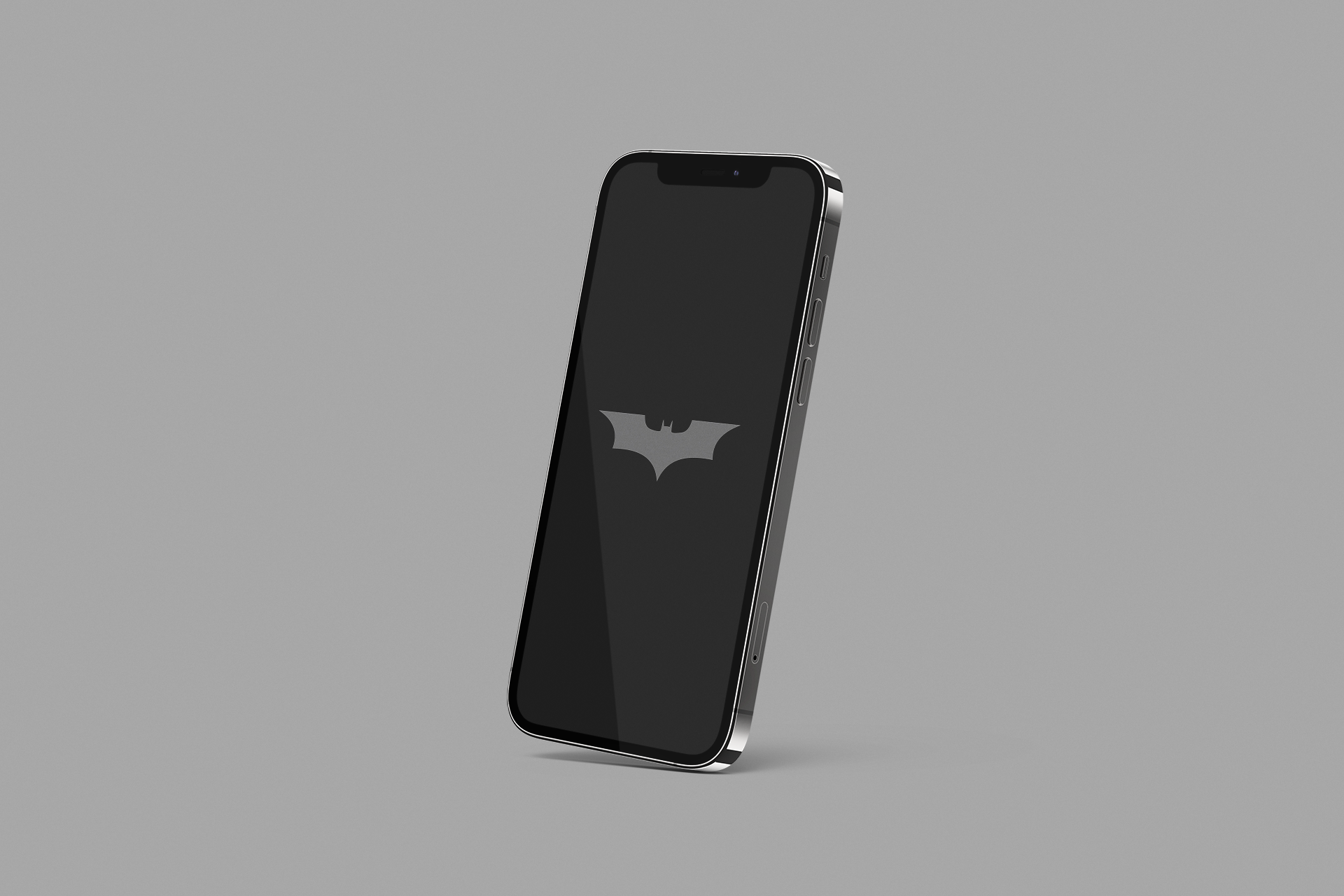
The best Batman logo wallpapers for iPhone
These perfectly minimalist Batman logo wallpapers for iPhone celebrate the hero Gotham deserves.
http://dlvr.it/SJgXPj
Abonați-vă la:
Postări (Atom)
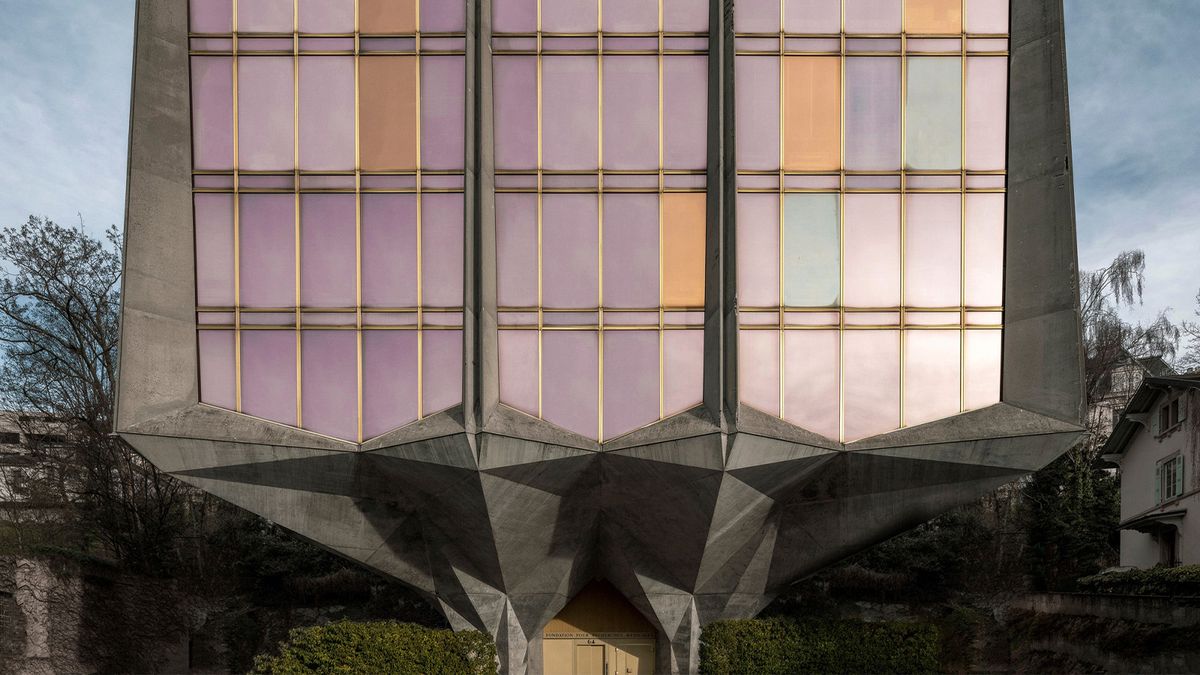
Step inside La Tulipe, a flower-shaped brutalist beauty by Jack Vicajee Bertoli in Geneva
Sprouting from the ground, nicknamed La Tulipe, the Fondation Pour Recherches Médicales building by Jack Vicajee Bertoli is undergoing a two...
-
Guy Bolongaro’s photography approach has an infectious and palpable energy on set. Our recent April 2022 issue shoot was no different, with ...
-
If this summer looks to be one of unrestrained escapism – the lifting of restrictions all but guaranteeing a mass exodus to the beach – so t...
-
It was only a few months after Mork-Ulnes Architects had completed a trio of concrete guest houses for a private client in Northern Californ...